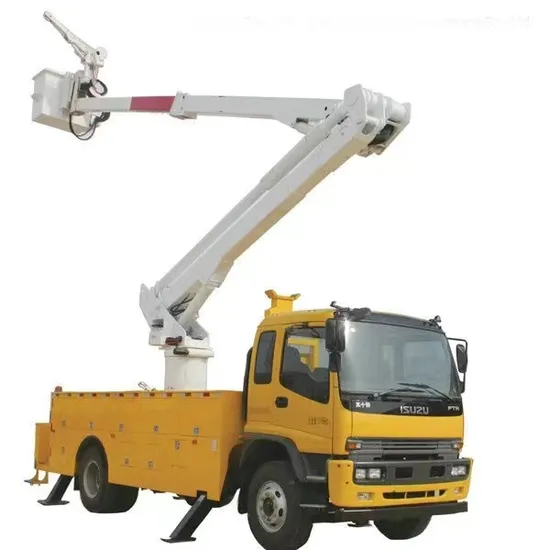
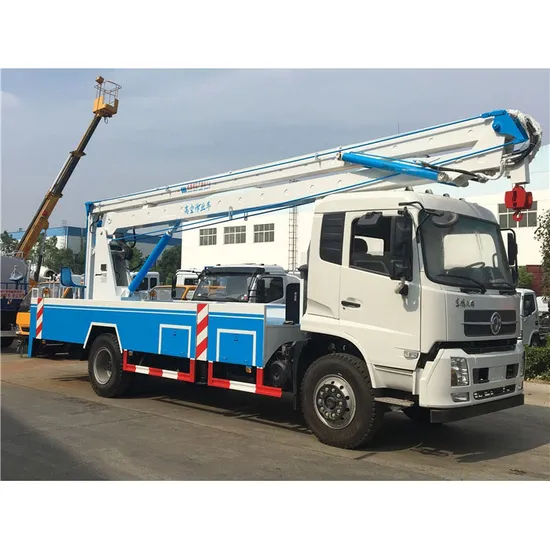
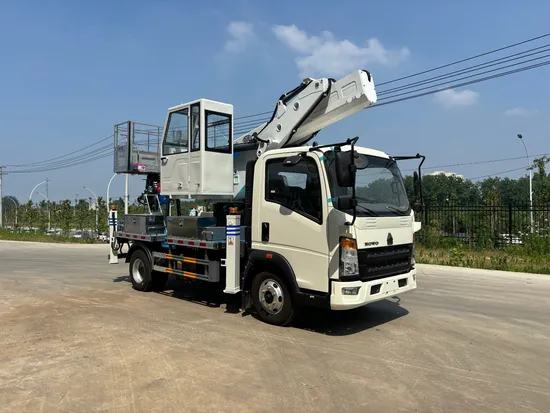
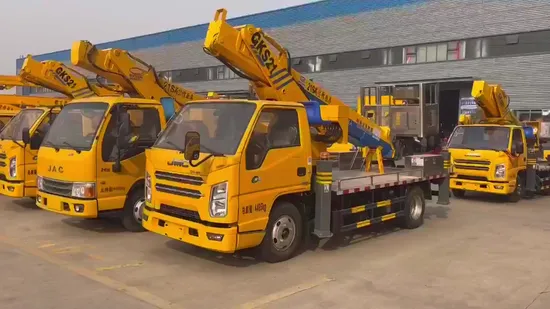
The Isuzu FTR 4x2 Telescopic Boom Aerial Truck 20-32m, model code CLW5160JGKZQ5, is a medium-duty aerial work truck on an Isuzu FTR cab and chassis. It uses a telescopic boom and an operator platform, a 4×2 drive layout, a four-cylinder Isuzu diesel engine of type 4HK1-TC50 and a manual gearbox, and it meets the Euro 5 emission standard.
With a heavier chassis and a longer boom than a light aerial truck, it suits utility maintenance teams, street lighting contractors and facade or sign crews who regularly work at heights where a small truck would run out of reach, and who need a heavier base vehicle for stability.
How a telescopic boom works
A telescopic boom is built from nested steel sections that slide out of one another under hydraulic power. The operator raises the boom to an angle, then extends the sections until the platform reaches the target. Because there are no hinged joints along its length, the boom travels in a straight line, which is convenient for working over an obstacle or along a wall, and it folds down to a short, compact shape for driving.
The boom rotates through 360 degrees at a speed of 0-2 r/min, so slewing is gradual and controllable. Four hydraulic support legs lift and level the vehicle before work starts. A hook with a maximum load of 1000 kg allows materials to be raised. The permitted platform working load is confirmed together with the load chart.
Chassis, engine and drivetrain
The cab is an Isuzu FTR type, offered with left hand drive. The 4HK1-TC50 engine is a straight four-cylinder, four-stroke, water-cooled engine with intercooling. A six-speed manual gearbox, type MLD, with six forward gears and one reverse, sends drive to the rear axle. Steering is power assisted and the brakes are air operated, which is the usual choice for chassis in this weight class.
The wheelbase is 4500 mm and overall dimensions are approximately 8150 × 2495 × 3650 mm. Curb weight is approximately 14300 kg, the front axle is rated at 6.3 tons and the rear axle at 13 tons. Tyres are 10.00R20, six in service plus one spare. Body colour is optional. The overall width of 2495 mm and height of 3650 mm should be checked against the narrowest gate, bridge or tunnel on your usual routes.
Operating on site
A heavier truck with a long boom needs a more careful set-up than a small one. Choose a parking position that leaves room to deploy all four support legs fully, and place pads under the feet whenever the surface is not hard. Check that the truck is level before the boom leaves its rest. Keep the boom clear of overhead lines unless the work method, equipment and permits for that task are in place.
When the boom is extended, wind and sudden load changes have more effect on the platform. Establish a limit for wind speed with your safety officer, brief the operator on the emergency lowering procedure, and use the lower controls only for rescue or setup. Between jobs, retract the boom fully, stow the legs and secure the platform before the truck is driven on the road.
What to confirm before ordering
Maximum working height, engine power, payload against the axle ratings and curb weight, and the platform rated load are confirmed in the quotation, and the answers should be put in writing.
You should also confirm the optional equipment, the body colour, the Euro 5 emission standard for the roads where the truck will work, and which of the offered cab and chassis details applies. Tell our team about road restrictions, the surfaces you work on and the tasks you perform, so the boom, outrigger layout and platform can be specified to match.
Request a current quotation for your selected configuration, quantity and delivery terms.