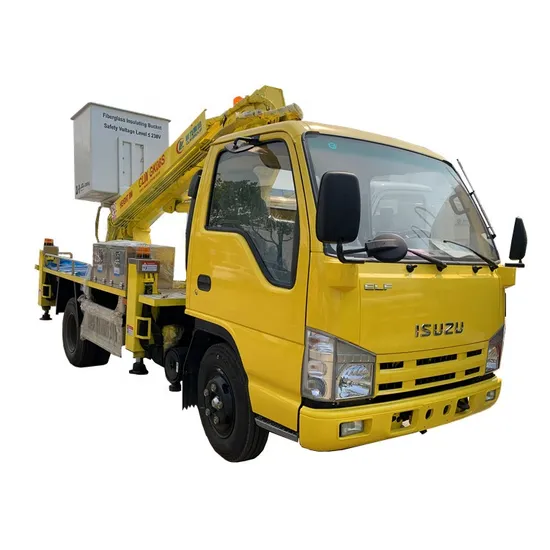
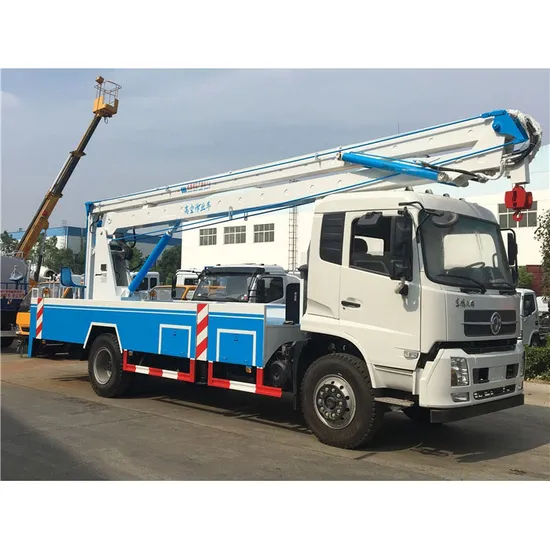
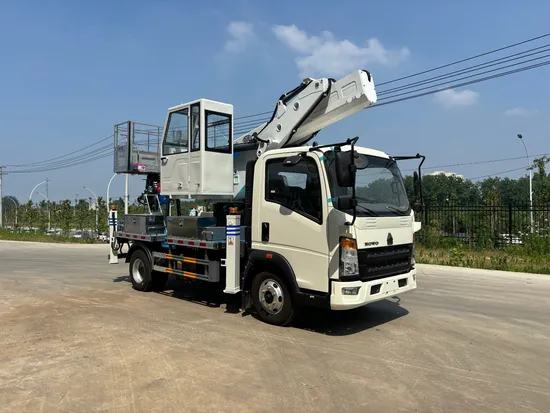
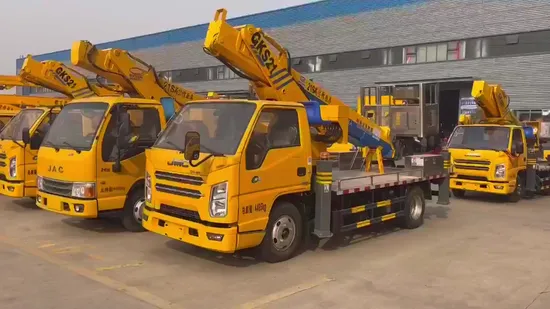
The Isuzu 4x2 Hydraulic Aerial Ladder Truck 12m Euro 3 is a hydraulic aerial work platform built on an Isuzu light-duty chassis with a 4x2 drive layout. A hydraulic arm raises a work bucket that can rotate through 360°, giving crews a safe place to stand while they work above ground level. The engine meets the Euro 3 emission standard and the gearbox is manual.
This compact truck suits street lighting teams, sign installers, building maintenance crews and tree-care contractors who need a platform that can still enter narrow streets and yards. Left-hand drive is standard and right-hand drive is available on request. Working height and reach for your configuration are confirmed in the quotation.
Typical working routines
A normal job begins with positioning the truck, extending the outriggers and levelling the platform. The crew then climbs into the bucket, raises it to the work position and carries out the task, such as replacing a lamp, fixing a sign or trimming a branch. When finished, the bucket is lowered, the outriggers are retracted and the truck moves on.
Because the chassis is short, with a 3360 mm wheelbase and an overall size of 5998×2050×2850 mm, the truck is easy to place beside kerbs and under low obstacles. The bucket is 1100×650×1150 mm and carries up to 200 kg, so it is built for one or two people with hand tools rather than heavy equipment.
Chassis, engine and drivetrain
The engine is model 4KH1CN5MD, a straight four-cylinder, water-cooled, intercooled unit with electronically controlled high-pressure fuel supply. It displaces 2.999 litres and delivers a maximum output of 85 kW. An Isuzu MSB gearbox gives five forward gears and one reverse, operated manually. Curb weight is approximately 4,500 kg.
Brakes are oil operated with a vacuum booster pump. The front axle is rated at 2 tons and the rear axle at 4.8 tons. Tyres are 7.00R16 standard tyres, six fitted plus one spare. The cab has an air container. Drive layout is 4×2 on all builds, so tell us if you need anything other than the standard layout.
Outriggers, hydraulics and controls
The outriggers have a horizontal span of 3620 mm and 2700 mm, giving a wide stable base once deployed. A hydraulic automatic levelling system adjusts the platform so the bucket stays level on gentle slopes. The hydraulic system works at a pressure of 18 MPa, which provides the force to lift the arm and hold it steady.
The control system allows two actions at the same time with stepless speed regulation, meaning the operator can slew and raise together and adjust movement speed smoothly. This helps when positioning the bucket close to a pole or wall without sudden jerks. Practice on open ground is a good way for new operators to learn the controls.
What to confirm before ordering
Start with the working height and outreach you need, and ask us to confirm both for your build. Confirm the emission standard, the drive side, the chassis brand you want and any bucket or accessory options. The model name used for the arm configuration is also confirmed in the quotation, so the paperwork matches the truck you receive.
Describe your sites too. Narrow roads, soft ground and limited space for outriggers all affect how you will use the truck. Tell us about height limits on your routes and the loads your crews lift into the bucket. Customisation is available, and each agreed change is written into the quotation before work begins.
Maintenance and daily checks
Each day, check engine oil, coolant, tyre pressures and the brake feel before moving the truck. Before lifting, inspect the hydraulic hoses and fittings for leaks, look at the outriggers for damage and confirm the leveling system responds. Make sure the bucket gate closes properly and that the control panel works.
After work, clean the bucket and arm, retract the outriggers fully and stow tools. Keep the hydraulic oil at the correct level and change it on the schedule we provide. Record any unusual sounds or slow movements so they can be inspected before they turn into a failure on site.
Request a current quotation for your selected configuration, quantity and delivery terms.