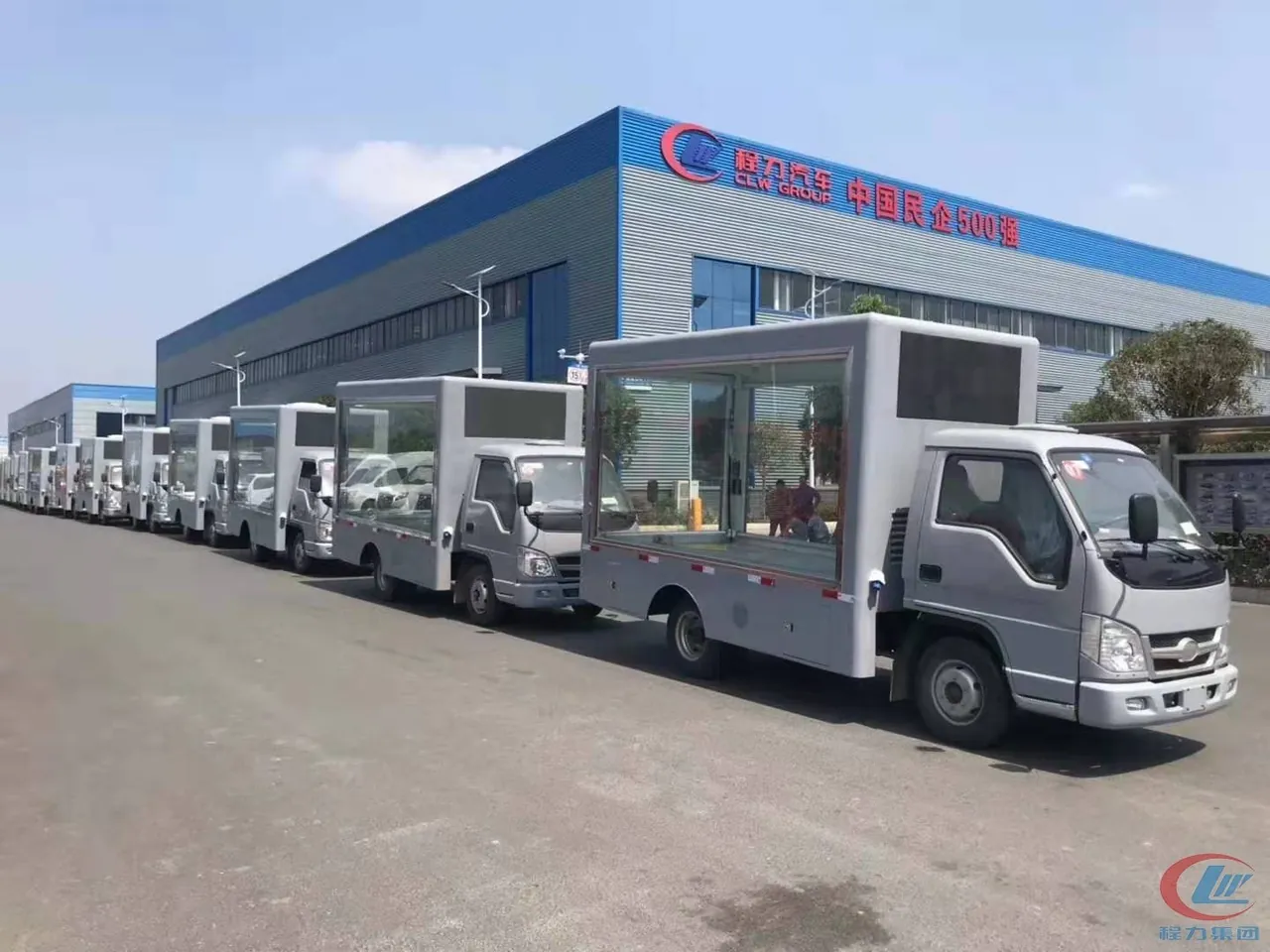
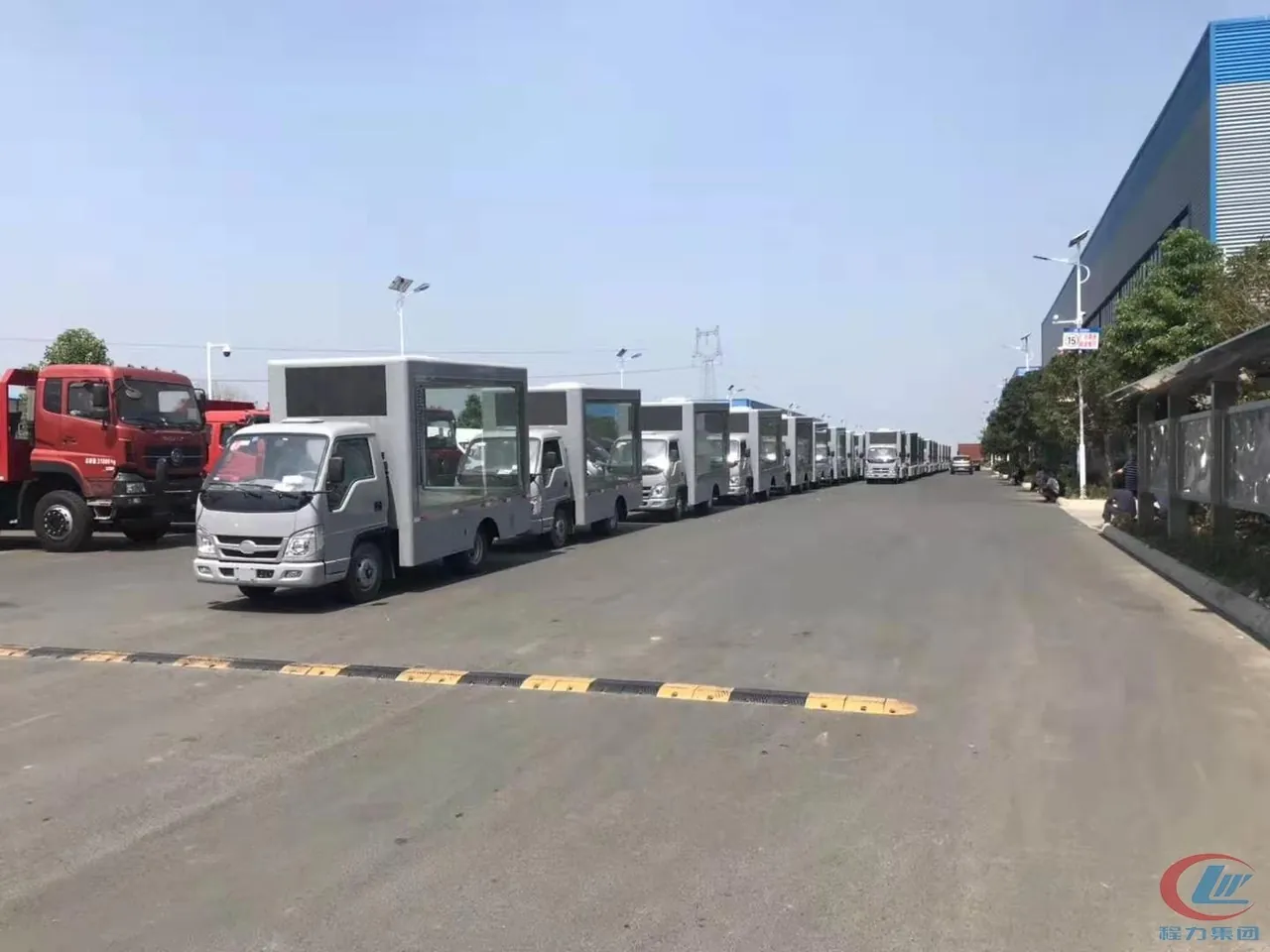
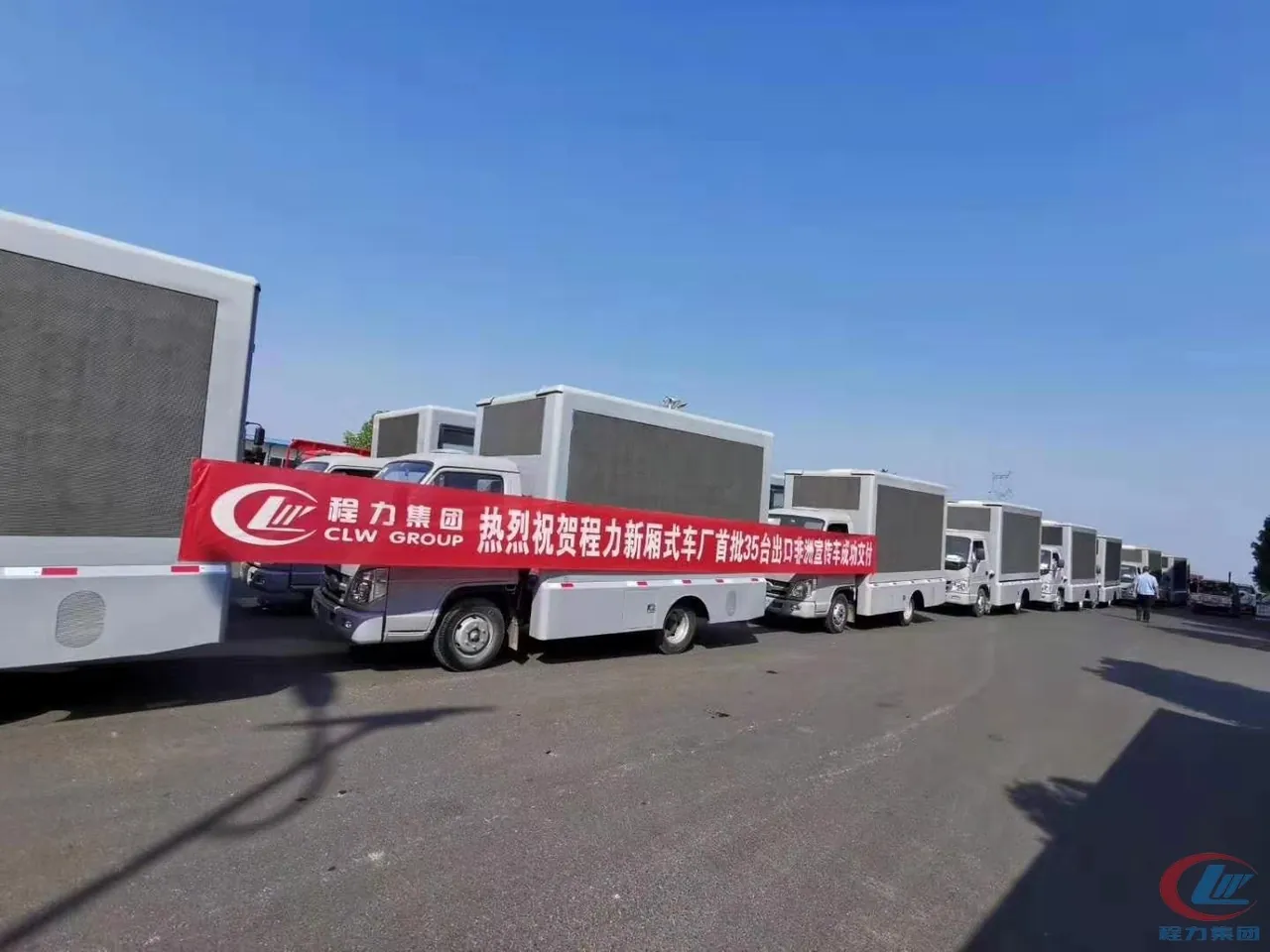
Chengli Group finished final preparations on the first batch of 35 LED advertising trucks for export to Africa. It was another large export order.
What was supplied
The photos show small light trucks in white and grey. Each carries a box body with a large LED screen on the side. A banner in one photo, written in Chinese, congratulates the factory on the first batch of 35 units for export.
About this vehicle type
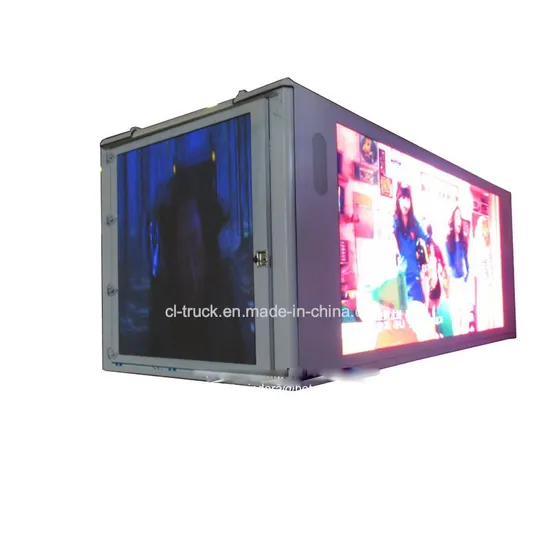
An LED advertising truck is a vehicle built to display ads on a screen. It has four main parts: the truck chassis, the large screen system, the power supply system and the control system. Screens come in P4, P5 and P6 pixel pitches, and the P number reflects display clarity.
These trucks are used for company promotion, brand campaigns, sports events, product displays, concerts and shows. They can also be driven to busy streets, squares and parks to reach people directly.
How an LED advertising truck works
The truck is both a vehicle and a moving display. The driver takes it to a street, square or event site, parks it where people can see the screen and switches the display on. Content such as video, images and scrolling text is loaded through the control system and shown on the LED panels, usually in a loop.
Power for the screen is a key point. Depending on the design, the screen can run from a generator, a battery and inverter set, or an external supply at the site. The screen is normally powered while the truck is parked, and the operator then moves on to the next location.
Main components
- Chassis: a light or medium truck that carries the body and screen and sets the payload and the road handling.
- Box or screen body: the structure that supports the LED panels and protects the equipment inside.
- LED screen: the display itself, available in different sizes and in P4, P5 and P6 pixel pitches, where a smaller number gives a sharper image at close range.
- Power supply system: a generator or battery set that feeds the screen and control equipment, sized to the screen's consumption.
- Control system: the controller and software that load and schedule the content shown on the screen.
- Cables, mounting and safety items: wiring, brackets and lights that keep the screen secure and safe while the truck is moving.
What to check when you order a similar unit
- Chassis and engine class: pick a size that suits the roads and parking areas where the truck will work.
- Screen size and pixel pitch: choose P4, P5 or P6 according to how far away viewers will usually stand.
- Single-side or multi-side screens: decide how many display faces you need and where the audience will be.
- Power arrangement: confirm how the screen will be powered and how long it needs to run at an event.
- Drive side: left-hand drive is standard and right-hand drive is available on request.
- Climate: mention heat, dust, rain and humidity so the screen and electrical parts can be protected.
- Spare parts and documents: ask for spare modules, cables and the operating manual, and for the packing list and handover documents you need for shipping.
Our guides on choosing P4, P5 or P6 for an LED billboard truck and on how much power an LED advertising truck needs at an event go into more detail. You can also browse our LED advertising trucks.
Similar models you can order
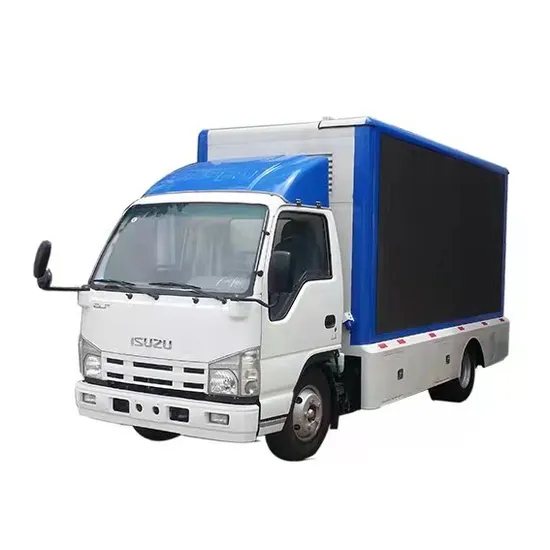
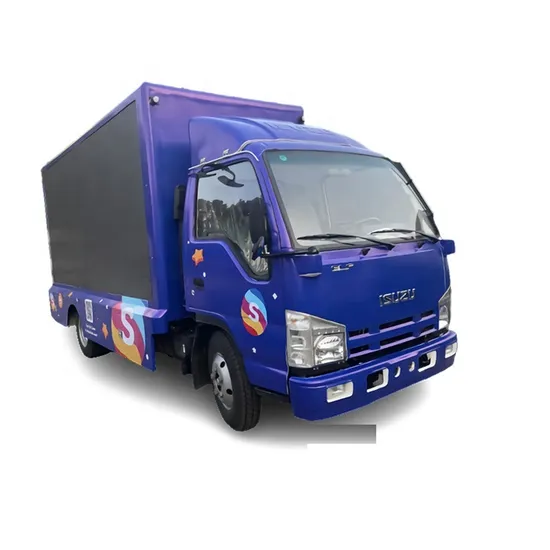
You can specify the chassis, screen size and pixel pitch for a similar unit. Left-hand drive is standard and right-hand drive is available on request. Related models include Foton Mini Small Mobile LED Screen Truck 86HP, Chengliwei P4-P6 3-Side LED Advertising Van Box 1.0L and Isuzu 100P LED Advertising Truck.
To ask for a quotation, please contact us.