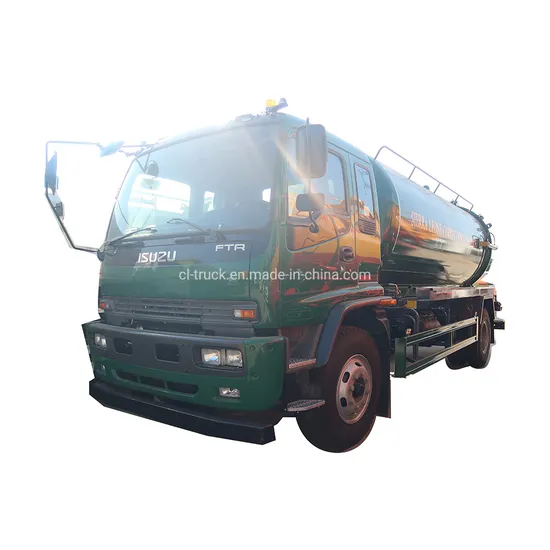
A vacuum truck specification becomes easier to read when its equipment is divided into four groups: storage, suction, connections and discharge. These groups work together, but their numbers answer different purchasing questions. Tank capacity does not describe pumping performance, and a pump quantity does not establish hose reach. Buyers comparing sanitation equipment should keep each field attached to the function it actually describes.
Storage: identify the tank configuration
Start with the tank capacity and any stated material or thickness. The detailed equipment table for the Dongfeng 6×4 vacuum truck specifies a 16 m³ tanker. This is a storage-volume entry. It does not tell the buyer how quickly the truck will complete a collection visit or how much loaded vehicle weight is available for a particular material.
The Dongfeng Kinland sewage suction vehicle detailed table identifies a 15 m³ carbon-steel tank with 6 mm thickness. Capacity, material and thickness should remain separate items in the equipment schedule. That format also makes it easier to state the precise tank configuration in the purchase quotation.
Suction: distinguish pump identity from performance
The Dongfeng 6×4 equipment list includes two vacuum pumps together with a power take-off and transmission shaft. The Kinland listing also describes two pumps and names Yifeng in its pump entry. Pump quantity and manufacturer information help identify equipment, but they are not a complete performance curve.
The Isuzu FTR vacuum sewage suction truck lists an XD-63 pump or a Hangzhou Weilong choice in its equipment information. An alternative should be resolved to the selected pump in the order. Avoid comparing one truck's named pump option with another truck's pump quantity as though those were equivalent specifications.
Connections: hose length and vertical suction range differ
Hose length describes the physical length of the supplied hose. Vertical suction range describes an elevation difference under stated operating conditions. Neither value can substitute for the other: a hose may follow a horizontal route, bends and a vertical section between the truck and the collection point.
Keep hose length, diameter, coupling type and supplied sections in the connection group when those details are specified. The selected examples describe sewage pipework or pipe networks but do not provide a complete numerical hose schedule. Their comparison therefore should not assign a hose length or suction-height figure that the equipment description does not give.
| Equipment group | Useful fields | Keep separate from |
|---|---|---|
| Storage | Tank volume, material and thickness | Payload and pumping rate |
| Suction | Pump identity, quantity and drive arrangement | Tank capacity and hose length |
| Connections | Hose dimensions, sections and couplings | Vertical suction range |
| Discharge | Outlet arrangement, tipping and rear-door equipment | Suction-side equipment |
Discharge: read the unloading equipment as a system
The Kinland specification includes a self-flow outlet, a dump function and a hydraulically opening rear door. These entries describe different parts of the unloading arrangement. It also lists a water-gas separator and an anti-overflow valve, which belong in the equipment inventory rather than being treated as additional tank capacity.
For the Isuzu FTR example, the detailed table lists a 12 m³ tanker, vacuum pump, power take-off and associated pipework. Its published equipment description should be presented at that level of detail without importing the Kinland truck's rear-door or unloading specification into the comparison.
Create a concise purchasing schedule
For your sanitation project, arrange the selected truck's quotation under the same four headings and add the intended collection and receiving arrangements. This keeps storage requirements visible while giving pumps, connections and discharge equipment their own place. The resulting schedule describes what is included and makes different vacuum truck configurations easier to compare on consistent terms.