A rectangular tipper body volume calculation uses internal length × internal width × internal height to a defined fill line. If all measurements are in metres, the result is in cubic metres. This simple relationship is useful only when the measured space actually has that rectangular geometry and the dimensions describe its interior.
Use a clearly labelled hypothetical example
Consider a hypothetical rectangular internal space measuring 4 m long, 2 m wide and 1 m high. Its geometric volume to that height is 4 × 2 × 1 = 8 m³. These are illustrative dimensions only, not measured values for any truck discussed below.
The example does not prove a payload in tonnes or an allowance for material above the sides. It describes a defined geometric space. Material mass and the vehicle's carrying specification remain separate questions.
External measurements include more than the load space
External body dimensions can include side plates and other construction features outside the internal cavity. Overall truck dimensions include the chassis and cab as well. Neither should be substituted for clearly defined internal dimensions when calculating exact body volume.
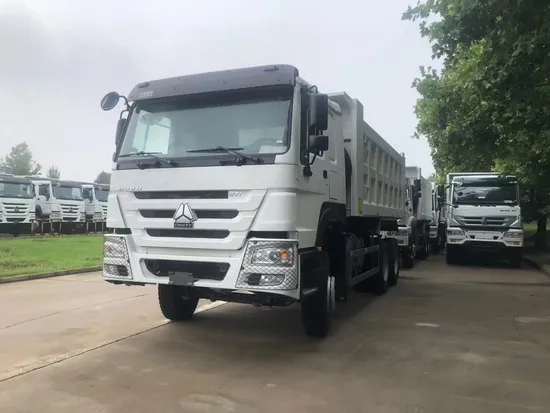
The HOWO 6×4 tipper detailed sheet lists a box-dimension entry of 5600 × 2300 × 1200 mm and overall vehicle dimensions of 8540 × 2500 × 3450 mm. The body entry is not explicitly labelled as internal in the supplied table, so it should not be used here to claim an exact load-space volume.
Body shape affects the calculation
A body with sloped sides or a curved floor does not occupy the full rectangular envelope defined by its maximum width and height. A U-shaped section needs its actual cross-sectional geometry. Multiplying bounding dimensions as though every corner were square can overstate the enclosed space.
Even a broadly rectangular body may have internal features that affect usable geometry. The appropriate drawing should identify the measurement boundaries and fill reference. A plate-thickness entry alone is not enough to reconstruct every internal dimension accurately.
The HOWO construction tipper also lists 5600 × 2300 × 1200 mm for the body and separate bottom and side thicknesses. Those figures describe the published configuration, but they do not provide a complete internal cross-section for an exact volume calculation.
Resolve height ranges before calculating
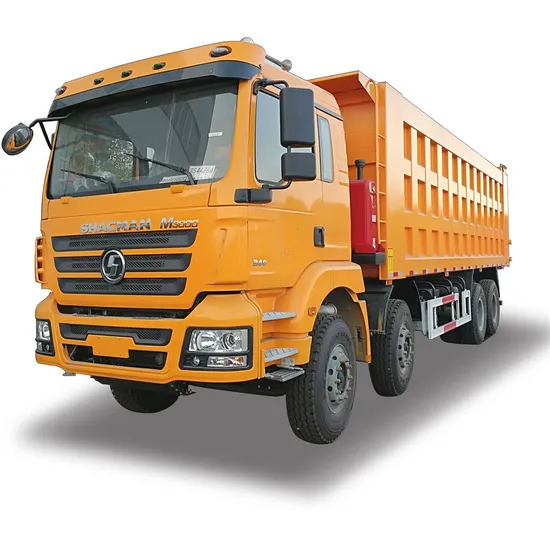
The Shacman M3000 8×4 detailed configuration lists body dimensions of 7400 × 2300 × 1100–1600 mm. The height range represents a choice or variable entry, not one fixed internal height. The selected body version and its measurement convention must be identified before a precise volume is stated.
| Information | Use in the comparison |
|---|---|
| Overall vehicle dimensions | Transport and access planning |
| Unqualified body dimensions | Initial body-size reference |
| Defined internal dimensions | Geometry calculation where shape permits |
| Cross-sectional drawing | Curved or sloped body geometry |
| Rated payload | Separate mass-based carrying specification |
Ask for a defined volume statement
For construction buyers, request the selected body drawing and a volume statement identifying whether it refers to a level fill or another stated convention. Keep that volume beside, rather than in place of, the truck's payload information. This gives the comparison a clear geometric basis without presenting an estimate from exterior measurements as an exact capacity.
Related reading: Tipper truck weight: kerb weight, GVW and payload by size