A refrigerated truck specification becomes easier to use when it is divided into three groups: cargo space, insulated-box construction and cooling equipment. The vehicle's external dimensions belong alongside these groups for access planning. They must not be used as the cargo's available space.
Group one: the space available for goods
The tri-axle refrigerated semi-trailer lists overall dimensions of 13,500 × 2,600 × 3,995 mm and a separate van-dimension entry of 13,300 × 2,400 × 2,300 mm. It also contains another van-dimension entry with several alternatives. Ask for one confirmed internal loading envelope for the selected trailer.
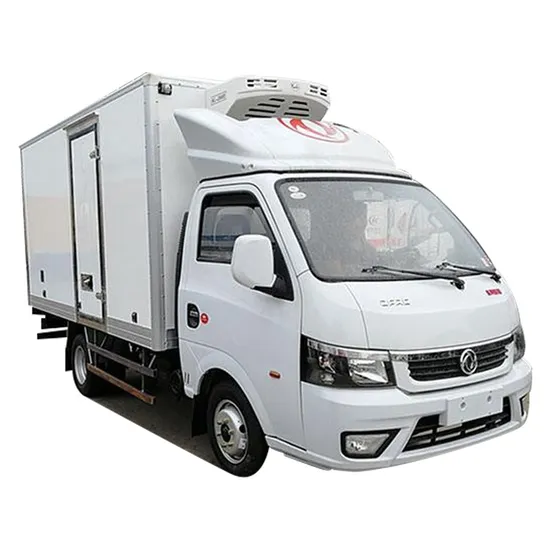
The Dongfeng mini freezer truck gives 5,520 × 1,820 × 2,590 mm overall and 3,490 × 1,737 × 1,750 mm van size. These labels describe different measurements. Do not multiply the overall dimensions to claim cargo volume.
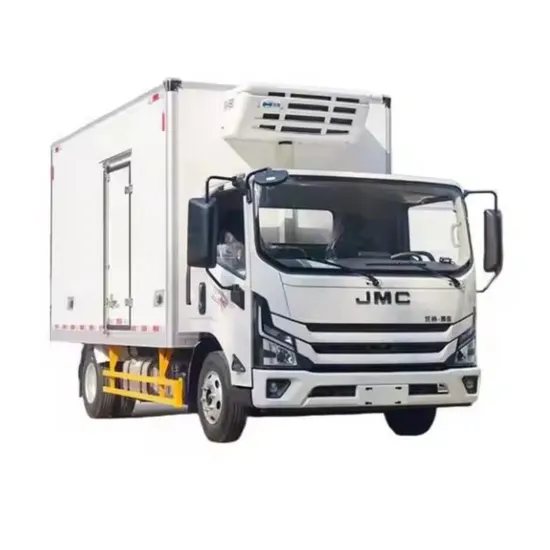
The JMC refrigerator truck lists SC and DC cargo-length options of 4,100 mm and 3,100 mm. Length alone is not a complete loading specification. Request width, height, door openings and the chosen cab/body arrangement.
Group two: the enclosure around that space
The trailer describes glass-reinforced plastic surfaces and, in one detailed configuration, a 10 cm polyurethane insulation layer. Another material entry uses a different unit wording. Request a section drawing with the selected layer thickness rather than treating an inconsistent label as a physical specification.
The Dongfeng page describes a polyurethane bonded structure and offers different surface-material descriptions. The JMC page mentions XPS and an 8 cm insulation layer. Keep these material entries attached to their respective products; matching general use does not prove identical panels.
Ask for the floor, panel joints, door seals and any access doors. Panel thickness is one construction field, not a complete measure of the assembled box's thermal performance.
Group three: the refrigeration package
The trailer lists independent refrigeration options including Thermo King and Carrier, with differing temperature entries between configurations. Request the actual unit model and its stated operating conditions. A list of brand choices does not identify which unit comes with the offer.
The Dongfeng says the unit model depends on temperature needs. The JMC table does not identify a specific refrigeration-unit model. Both therefore need an explicit cooling specification in the final quotation. Do not use the chassis engine output as a substitute for refrigeration capacity.
Keep each measurement's purpose visible
| Field | Use |
|---|---|
| Overall vehicle or trailer dimensions | Route, gate, parking and loading-area access |
| Confirmed internal dimensions | Package arrangement and usable loading space |
| normal cargo volume | A space measure with a stated calculation basis |
| Panel material and layer thickness | Construction of the enclosure |
| Unit model and performance conditions | Cooling equipment offered for the specified duty |
Provide Chengliwei the goods, package dimensions, required load, target temperature and door-opening pattern. Ask for these three specification groups in the response. That allows a trailer or smaller truck to be assessed using confirmed cargo space and equipment rather than external size alone.