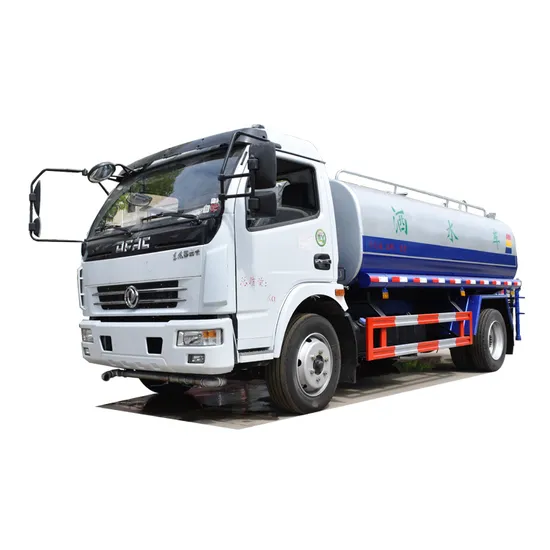
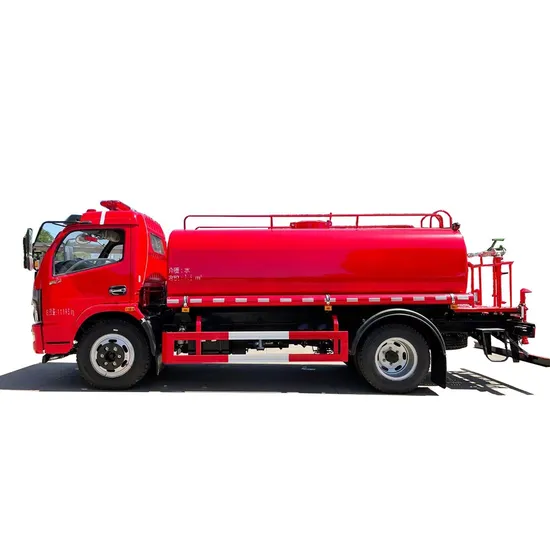
The water trucks compared in this guide include 5,000 L, 10,000 L and 20,000-25,000 L configurations, approximately 1,320, 2,640 and 5,280-6,600 US gallons. Tank size tells you the volume; the complete vehicle's loading limits determine how much water it may carry. Water weighs about one tonne per 1,000 litres, so check the selected tank, chassis and installed equipment together.
Quick answer: how much water a water truck carries
The main catalogue examples compared here have nominal capacities between 5,000 and 25,000 litres, or about 1,300 to 6,600 US gallons. The selected tank and complete vehicle configuration determine the quoted capacity. On the water trucks listed on this site, 4x2 trucks carry 3,000 to 16,000 litres, most often 5,000, 10,000 or 15,000 litres. 6x4 trucks carry 20,000 to 25,000 litres, and 8x4 trucks 25,000 to 30,000 litres. Water weighs about 1 kg per litre, so every 1,000 litres adds about one tonne to the load.
| Tank size | Cubic metres | US gallons | Weight of the water | Usual chassis |
|---|---|---|---|---|
| 3,000–5,000 L | 3–5 m³ | about 790–1,320 | 3–5 t | 4x2 light truck |
| 8,000–10,000 L | 8–10 m³ | about 2,110–2,640 | 8–10 t | 4x2 medium truck |
| 12,000–16,000 L | 12–16 m³ | about 3,170–4,230 | 12–16 t | 4x2 heavy truck |
| 20,000–25,000 L | 20–25 m³ | about 5,280–6,600 | 20–25 t | 6x4 truck |
| 25,000–30,000 L | 25–30 m³ | about 6,600–7,930 | 25–30 t | 8x4 truck |
The rest of this guide explains why the tank volume and the payload rating must both be checked before you rely on any of these figures for a project.
Read liters and cubic meters as volume
One cubic meter equals 1,000 liters. An 8,000-liter tank therefore has a normal volume of 8 m³, while 10,000 liters equals 10 m³. This is a unit conversion, not a calculation of permissible payload. Also distinguish an exact tank capacity from a broad catalog volume range: a range such as 5,001–10,000 L does not identify the tank fitted to a particular order.
For a procurement comparison, keep separate columns for the capacity in the product name, the capacity in the equipment table and the capacity selected in the quotation. If the listing contains more than one figure, request a configuration-specific answer instead of treating every figure as a description of the same finished truck.
Keep payload separate from tank size
Payload is expressed as mass, usually kilograms or tonnes, while tank volume is expressed in L or m³. A truck also carries its tank, pump, pipework and other installed equipment. The delivered vehicle's rated loading information must relate to that complete configuration. Do not infer an unspecified payload from the tank name or assume a bare numerical payload field has a particular unit.
For example, the Dongfeng Tianjin cleaning-truck listing separately gives a 10 m³ tank and a rated payload weight of 10,000 kg. Those are two listed specifications, not interchangeable labels. Ask the supplier to identify the final vehicle weight and loading schedule for the exact cleaning equipment you order.
Three Dongfeng listings illustrate how the units appear
| Product | Capacity wording | How to use it in an inquiry |
|---|---|---|
| Dongfeng Tianjin Kingrun 4X2 Cummins Engine Cleaning Truck | Tank capacity 10 m³; tanker-body size 10,000 liters | Specify the cleaning and spray equipment alongside the requested tank volume. |
| Dongfeng 10000 Liters Water Bowser | 10,000 liters in the product name; 5,001–10,000 L volume band; equipment table lists 4,000–5,000 L | State that the requested quotation is for the 10,000-liter configuration and obtain its matching tank and chassis schedule. |
| Dongfeng 4X2 8000 Liters Water Spray Truck | 8,000 liters in the product name; 5,001–10,000 L volume band; equipment table lists 4,000–5,000 L | Identify the 8,000-liter configuration explicitly rather than using the broad volume band as an exact capacity. |
The 10,000- and 8,000-liter names provide normal capacity examples. Their equipment tables require a configuration choice before either becomes a final purchase specification. The bare “5” payload entries in those listings should not be converted into a confirmed carrying allowance.
Cleaning equipment changes what you need to specify
The Tianjin Kingrun listing includes a CLW80QZF-60/90N water pump, an adjustable water spray cannon and an X-60A fog cannon. This makes it useful for discussing a cleaning or dust-suppression package. Tank capacity tells you the normal stored volume; pump and nozzle information describes how the water is applied. A pump-flow entry is not tank capacity and does not, on its own, establish operating time for every spray mode.
Tell the supplier whether you need road washing, site dust suppression or water transfer. State which outlets will be used and where the truck will refill. A larger normal tank may reduce refill frequency. Access, the selected equipment and the complete vehicle's loading limits still belong in the comparison.
Water tanker size chart: litres, chassis and typical use
Water tanker sizes are quoted in litres or in cubic metres, where 1 m³ equals 1,000 litres. The listed models below show how tank size and chassis go together.
| Model | Tank size | Chassis and notes |
|---|---|---|
| Isuzu 600P Stainless Steel Water Truck 5000L Euro 5 | 5,000 L | Isuzu 600P 4x2 |
| Dongfeng 4x2 RHD Stainless Steel Water Tank Truck 10000L | 10,000 L | Dongfeng 4x2, stainless steel tank, right-hand drive |
| Dongfeng 6x6 Off-Road Water Tank Truck 10000L | 10,000 L | Dongfeng 6x6 off-road, tank 4000×2050×1300 mm |
| HOWO Water Tank Truck 15-20m3 LHD or RHD | 15,000 L | HOWO, 15,000 kg maximum payload |
| Shacman 6x4 Water Sprinkler Truck Euro 3 | 20,000 L | Shacman 6x4, tank 6600×2490×1535 mm |
| HOWO 6x4 LHD Water Tank Truck 20000-25000L Euro 4 | 20,000–25,000 L | HOWO 6x4 |
Use the chassis pairings above as catalogue examples, not universal loading rules; confirm the complete vehicle rating for the selected tank. In US gallons, 5,000 litres is about 1,320, 10,000 litres about 2,640 and 20,000 litres about 5,280.
For prices by size, see the water tanker truck price guide.
Express your requirement as water delivered per trip
For a construction or municipal project, write the quantity needed between refill visits in liters or cubic meters. Include the country and work location, access restrictions, refill point and intended application. Distinguish daily water demand from the quantity required on one trip; they are not necessarily the same.
- Required water quantity per trip, with the unit clearly stated.
- Road washing, dust suppression or transfer duties and the desired equipment.
- Refill location and the route between the source and work area.
- The selected tank capacity and complete-vehicle loading information to include in the quotation.
Send Chengliwei your required water quantity per trip and operating location. With those details, the supplier can prepare a tank, chassis and cleaning-equipment configuration that addresses the actual delivery task.
Choose water delivery, dust control or road washing equipment
| Application | What to specify beyond tank size | Route information to provide |
|---|---|---|
| Water delivery | Water use, tank material, pump, hoses and discharge connections; drinking-water duties require a suitable complete water-contact system | Quantity per stop, refill source and distance between customers |
| Construction, quarry or mine dust control | Required spray pattern, outlets, pump and any cannon equipment | Road surface, gradients, operating area and refill distance |
| Municipal road washing | Spray bars, nozzle arrangement and working controls | Street width, cleaning route and water availability |
On dry or dusty routes, refill distance and water application rate can matter as much as tank size. In restricted urban streets, access may favour a smaller truck. These conditions vary within countries, so describe the actual project rather than selecting capacity from the destination alone.
Compare water tanker and bowser models or dust suppression trucks. To request a water truck quote, send litres needed per trip, intended water use, spray or delivery equipment, road conditions, steering position and destination.
Common questions about water truck capacity
How many gallons of water does a water truck hold?
A small 4x2 water truck holds about 1,300 US gallons (5,000 litres), a medium 4x2 truck about 2,600 gallons (10,000 litres) and a 6x4 truck about 5,300 to 6,600 gallons (20,000 to 25,000 litres).
How much does a full water truck weigh?
Add the weight of the water to the empty truck. On the models listed on this site, a 4x2 water truck weighs about 6.5 to 9 tonnes empty, so with 10,000 litres it weighs about 16 to 19 tonnes. A 6x4 truck weighs about 11 to 12 tonnes empty, so with 20,000 to 25,000 litres it weighs about 31 to 37 tonnes.
What is the largest water truck?
Among the rigid trucks listed on this site, 8x4 water trucks carry up to about 30,000 litres, for example the Sinotruk HOWO 8x4 water sprinkler truck with a 30,000 L tank. Larger quantities are usually moved with a water tank semi-trailer pulled by a tractor unit.
Related reading: our 1,000 and 2,000 litre water tanker guide, the 5,000 litre water tanker specification guide, the 10,000 litre water tanker checks and water bowser or water tanker: choosing the size.
Video: Water sprinkler truck overseas batch video
See a batch of Chengli water sprinkler trucks prepared for overseas shipment. Read the overseas batch shipment case. Tank capacity must be confirmed for each selected configuration; it cannot be established from the footage alone.