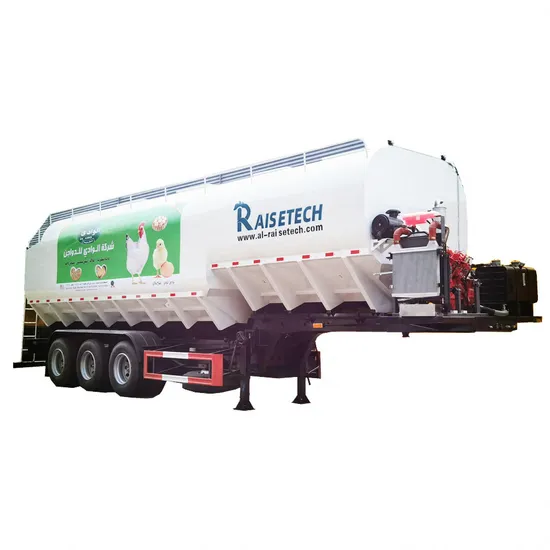
Do not assume that a bulk cement trailer can also carry animal feed, or that an auger feed trailer can replace a cement tanker. Similar-looking bulk bodies can serve different materials and discharge arrangements. Industrial-powder and feed duties should be specified separately; this article does not recommend sharing equipment between them.
A proposed change of duty requires more than cleaning the visible tank or changing a connection. The equipment supplier and the parties responsible for product quality must assess the complete material-contact path, receiving interface and documentation for the intended use.
Begin with the material specification
Identify the actual product, its relevant handling information and the acceptance requirements of the receiving facility. Cement and feed are not interchangeable descriptions of a generic dry load. A transport proposal should name the supported material rather than relying on the word bulk.
Ask which material information the equipment supplier needs to review the application. Keep any unknown characteristics or product-quality requirements visible. Do not fill the gaps with a claim that every powder or granule behaves alike.
Compare the two catalogue entries by their intended roles
The three-axle bulk cement trailer is a cement-transport enquiry starting point. Its available record does not establish a complete compressor-performance package, so that equipment needs to be defined in the quotation.
The three-axle feed semi-trailer with hydraulic auger identifies a different equipment format for feed delivery. Its listed reach figures do not establish compatibility with an industrial-powder duty or permission to interchange materials.
These are separate product proposals. Neither catalogue entry provides evidence that one can be converted into the other by a simple operating change.
Review the whole discharge arrangement
| Comparison item | Cement-duty enquiry | Feed-duty enquiry |
|---|---|---|
| Material | Defined cement product and relevant handling information | Defined feed products and quality requirements |
| Discharge equipment | Specified air-source and discharge package where proposed | Specified auger or other confirmed delivery arrangement |
| Receiving interface | Silo connection and conveying-route information | Silo inlet position and the defined delivery interface |
| Residual material | Application-specific information and acceptance criteria | Product-quality review of retained material and shared paths |
| Change of duty | Independent engineering and documentation review | Independent engineering and quality review |
The table identifies the questions to resolve. It is not an approval checklist that makes the two duties interchangeable when every box has an answer.
Tank shape alone does not define compatibility
Request the material-contact and discharge-path drawings for the actual proposed equipment. Ask the supplier to identify the components that determine the supported application and the documents that state its limitations.
Do not assume that pressure-related equipment and an auger arrangement can be directly substituted. Any engineering proposal must define the complete changed system and its responsibilities. This is not a modification procedure and does not provide operating-pressure changes or instructions for altering protective equipment.
Keep feed-quality requirements explicit
For feed duty, have the responsible quality personnel define the acceptable materials and the information required about prior use, residual material and cleaning. Do not infer a safe changeover from an empty-looking body or a generic washable description.
The purchasing record should identify the intended dedicated duty and any exclusions. A promise of complete residue removal or guaranteed biosecurity would require evidence beyond the catalogue information available here, so it should not be assumed.
Use a formal change list for any engineering enquiry
If you are investigating a different industrial bulk duty, provide a written description of the current equipment and proposed material. Ask the manufacturer to identify affected components, required documentation and the scope of an independent engineering review.
Record the tank, discharge equipment, drive source, connections, instruments and receiving installation separately. Include the effect of any proposed equipment change on the completed vehicle information. Do not operate on the basis of a preliminary sales discussion.
Compare dedicated proposals before assuming shared use saves money
Request separate equipment proposals for the actual cement and feed work. Compare the complete supply scope and your real delivery needs. A theoretical saving from sharing one trailer is not meaningful if compatibility and product-quality requirements remain unresolved.
Use your own route and demand information to assess fleet allocation. Do not count a vehicle as available for both duties until the relevant supported scope is established; for cement and feed, keep the purchasing plans separate.
Send a material-specific request
Tell Chengli which material each vehicle will carry, the receiving-facility details, delivery quantities and destination. Request the appropriate dedicated trailer configuration and its supporting documents. This keeps the enquiry focused on a defined transport task instead of treating every bulk tanker as the same equipment.