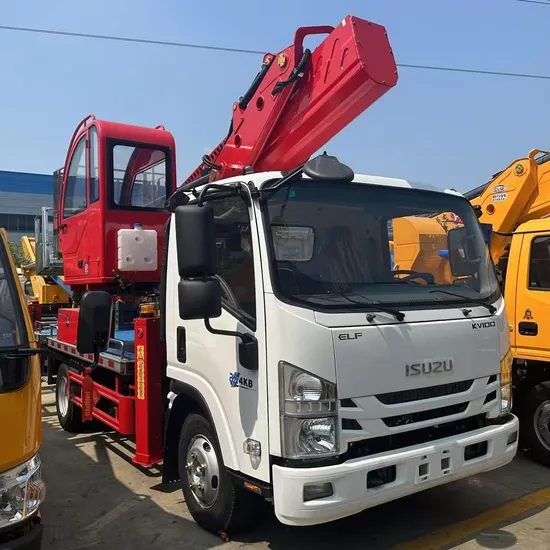
A truck mounted aerial platform needs to reach a target point, not simply display a large height number. Working height, platform height, outreach and basket load answer different questions. Read the field label and unit before comparing two listings or writing a purchase requirement.
A short terminology table
| Term | What it describes | What to request |
|---|---|---|
| Working or operating height, m | The stated working-height measure for the equipment | The supplier's definition and selected configuration |
| Platform height, m | Height of the platform reference above the ground | The exact reference point and corresponding operating condition |
| Horizontal outreach or working amplitude, m | Horizontal reach measured from the defined machine reference | A numeric reach value and the measurement origin |
| Platform payload, kg | Rated load assigned to the basket/platform | The rating and conditions for occupants, tools and other carried items |
| Outrigger span, mm | The specified support spread | A drawing of the required setup footprint |
Do not convert working height into platform height by subtracting an assumed constant. Use the values and definitions supplied for the exact machine.
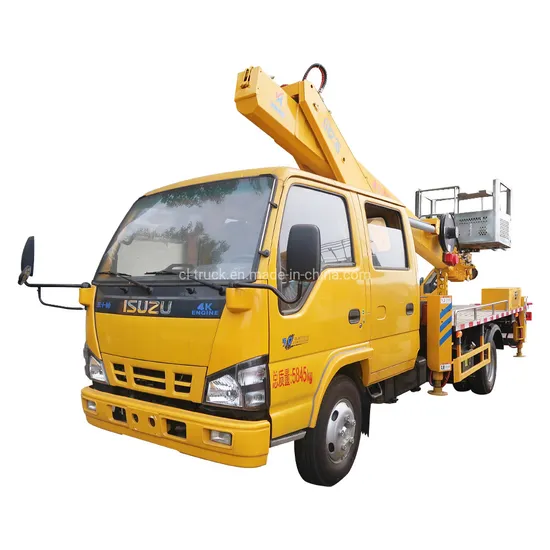
See the distinction in the double-row Isuzu listing
The Isuzu 600P double-row aerial operating vehicle gives a 16 m maximum-operating-height entry, with other height options mentioned. It separately lists platform height from the ground as at least 14.3 m and platform payload as 200 kg.
These fields illustrate why the names matter: 16 m and 14.3 m are attached to different measurements. The 200 kg entry is a basket rating, not a height and not the vehicle's road payload. Request a matching set of values for the version ordered.
Distinguish advertised height choices from a selected version
The 28m/30m/32m/33m aerial platform truck names multiple heights in its title, while its detailed operating-height entry identifies 32 m. Its page also contains other boom and height descriptions. Those should not be assembled into one assumed configuration.
The Isuzu 28m reach aerial vehicle has 28 m wording in the title and 32 m entries in its detailed information. Ask the supplier to identify the offered height version and provide its corresponding specification. A title alone cannot resolve the version.
Read outreach as a distance with a defined origin
The pages contain working-range fields labeled “Unlimited.” That wording does not provide a usable horizontal distance and must not be interpreted as physically unlimited reach. Request the numeric outreach and its reference point for the selected platform.
A 360-degree rotation entry is also different from outreach. It describes rotation, not an infinite operating radius. Likewise, a display that shows working amplitude does not itself establish the maximum value available.
Describe where the work is located
Give the supplier the target height and horizontal offset from the planned truck position. Include obstacles, available parking space and the basket load required. If measurements are taken from a curb or vehicle side, label that origin rather than presenting it as the manufacturer's outreach reference.
For your streetlight or building-access project, send a simple site sketch alongside the product reference. Ask Chengliwei to return working height, platform height, outreach and platform payload for one selected configuration. This makes the terminology useful for the purchasing decision without confusing separate maximum values.
Video: Aerial work truck boom demonstration
Watch Chengli aerial work trucks on different chassis, showing booms, work baskets and outriggers. The video illustrates the equipment category; use the specification for your selected vehicle when comparing working height and outreach.