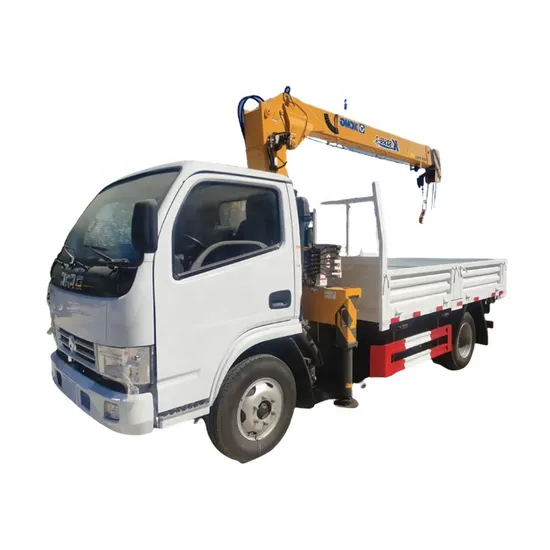
Truck mounted crane inspection records are most useful when they identify both the vehicle and the installed crane. A chassis model alone may describe several different bodies and lifting configurations. Linking identification numbers, equipment details and dates allows a fleet team to retrieve the correct instructions and understand the history of one complete unit.
Create an identity sheet for the complete truck
Use the fleet number as a convenient folder name. Retain the chassis identification, crane manufacturer, crane model and crane serial number inside the file. Add body or installation identifiers where supplied. Include accessible identification photographs and the delivery date so later documents can be matched to the equipment.
The Dongfeng light-duty cargo crane truck presents a cargo-body and boom-crane combination. Its product description is a useful purchase reference, while the delivered unit's identifiers provide the permanent link to its own manuals and service records.
Separate operating documents from event records
Keep operating manuals, the relevant load chart, equipment layout and supplied maintenance instructions together as reference documents. Record revision dates and the equipment configuration to which each applies. These files describe the equipment; inspection and repair records describe events in its history.
A dated inspection record should identify the unit, the person or organisation completing it, findings and any resulting action. Where an issue remains open, retain a clear status and link the eventual service record. Do not replace the original finding with the later repair note, because both explain what happened.
Keep repair evidence connected to the reported issue
For each service event, retain the original fault report, work order, parts information, service date and completion record. Include the mileage or operating-hour reading when available. A parts invoice alone may show what was purchased without establishing where it was installed or what issue it addressed.
The Dongfeng telescopic crane listing with working-basket wording illustrates why attachment details deserve their own records. The delivered attachments and their applicable documentation should be identified individually; a product title is not an attachment operating instruction.
Record configuration changes explicitly
If equipment is changed, preserve the previous configuration and the documentation covering the new one. Record the date, components involved, responsible service provider and revised instructions supplied. Link updated charts or drawings to that change instead of silently overwriting earlier files.
The Dongfeng light telescopic boom crane vehicle listing includes multiple capacity descriptions. Similar model names do not justify sharing one crane file across every truck. Each vehicle needs records for its actual installed crane and body.
Use a simple archive structure
| Folder | Example contents |
|---|---|
| Fleet-unit / 01 Identification | Chassis and crane identifiers, delivery sheet, label photographs |
| Fleet-unit / 02 Operating documents | relevant manuals, charts and equipment drawings |
| Fleet-unit / 03 Inspections | Dated reports and open-action records |
| Fleet-unit / 04 Repairs | Fault reports, work orders and completion evidence |
| Fleet-unit / 05 Configuration changes | Change descriptions and revised documentation |
Within each folder, use a date, document type and unit identifier in the filename. For fleets, inspection scheduling should be recorded from the relevant equipment instructions and local arrangements rather than assumed to follow one universal interval. The archive then supports both routine retrieval and a clear history of the complete truck-mounted crane.