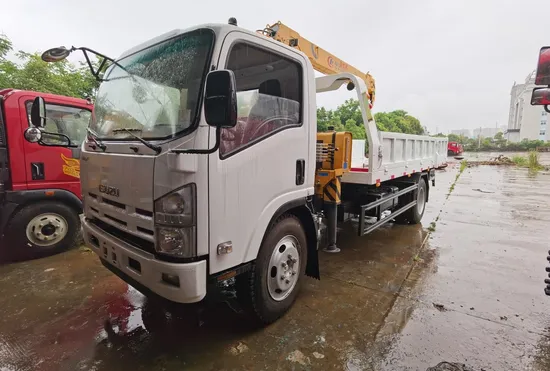
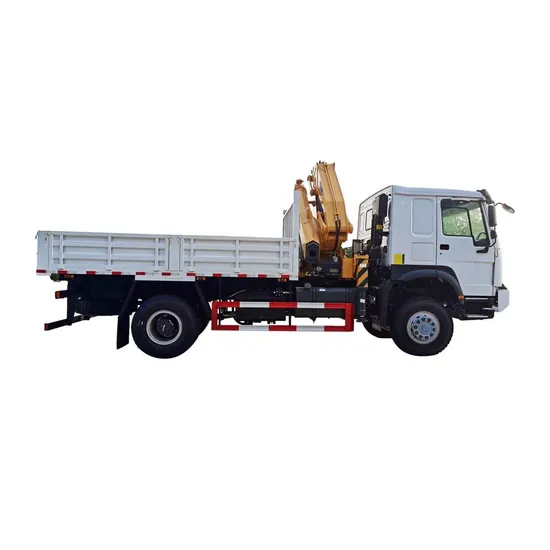
Crane trucks need outriggers because lifting a load moves weight to one side and out from the truck, which tyres, springs and the chassis were not built to carry alone. Outriggers widen the support base, lift the truck on to firm legs and keep it level while the boom works.
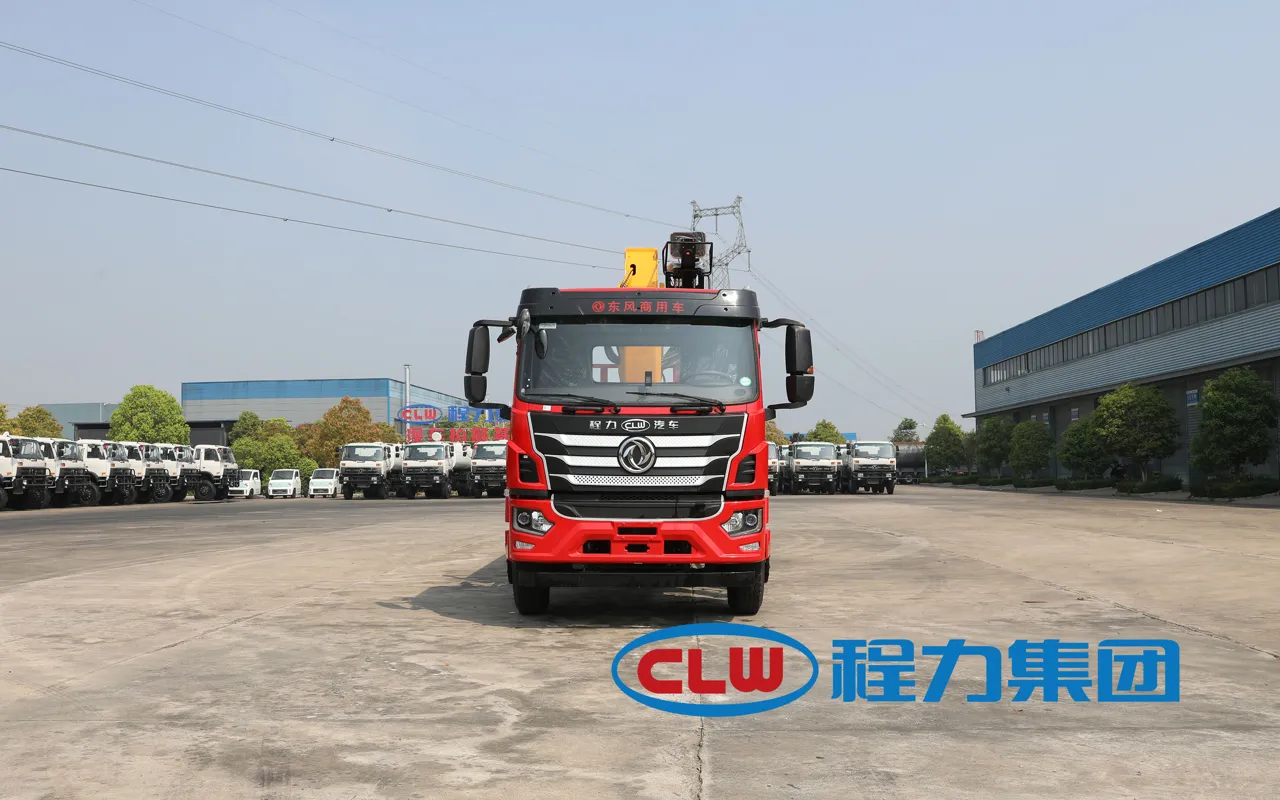
What goes wrong without them
A loaded boom pushes down and outward. The farther the hook is from the truck, the more the machine wants to tip toward the load. Tyres and suspension flex under that force, the truck leans, and the lean moves the load farther out. Outriggers break this chain by spreading the support points well beyond the wheels. They do three jobs at once:
- Widen the base. The legs reach out to the sides, which moves the tipping line away from the truck's centre.
- Take the load off the axles. The jacks carry the weight so the springs and tyres do not.
- Level the truck. A truck parked on a slope or camber can be brought level, and the load chart assumes a level machine.
Common outrigger set-ups
Most crane trucks use a horizontal beam that slides out from the frame, with a vertical jack leg at its end. Some use a hinged swing-out arm instead. Both finish in a foot that rests on the ground, usually on a pad. Some trucks carry outriggers at the rear only and others at front and rear, so ask which layout the quoted model has.
Using outriggers correctly
- Choose firm, level ground and watch for hidden voids, soft fill or slopes.
- Put a spreader pad or plate under each foot, especially on soft surfaces.
- Extend every beam to the position the manual requires, then lower the jacks until the wheels carry little or none of the weight.
- Check the truck is level before you lift, and recheck during a long job.
- Retract only after the boom is stowed.
Typical mistakes are lifting with partly extended beams, resting a foot on a kerb or loose material, and working on ground that has been wet or dug up. Follow the manual and the rules that apply where the crane will work.
Outriggers across our range
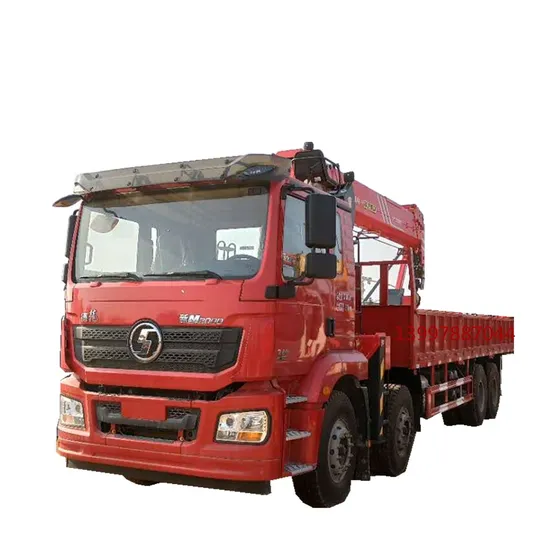
Every crane in the crane trucks category needs a proper support set-up, but the details vary by model, so ask for the outrigger type and layout when you request a quotation. The Sitrak 6x4 Automatic Truck with Unic 12t Crane lists a 16 m maximum lifting height, the HOWO 8x4 Truck Mounted Crane 20t Weichai 340 lists 21 m, and the 4x2 Truck-Mounted Crane 3.2t 190HP Euro 5 is a lighter option. The longer the reach, the more the outriggers matter. Compare models on crane trucks for sale, and see how to read a crane truck's lifting capacity to learn how the load chart depends on them.
Frequently asked questions
Can a crane truck lift without outriggers?
Only if the manufacturer's load chart allows it, and then usually at a much lower capacity. Many lifts are rated only with the outriggers fully set. Read the chart and manual for your model, and follow the rules that apply where you work.
Why do outrigger pads matter?
The foot of an outrigger concentrates the load on a small area. A pad spreads it across more ground, so the leg is less likely to sink into soft soil or crack a paved surface. Check the ground before each job.
Do all crane trucks have the same type of outriggers?
No. Layout, reach and the number of legs vary with the chassis and crane size. Ask for the outrigger type and its fitted positions for the exact model when you request a quotation.