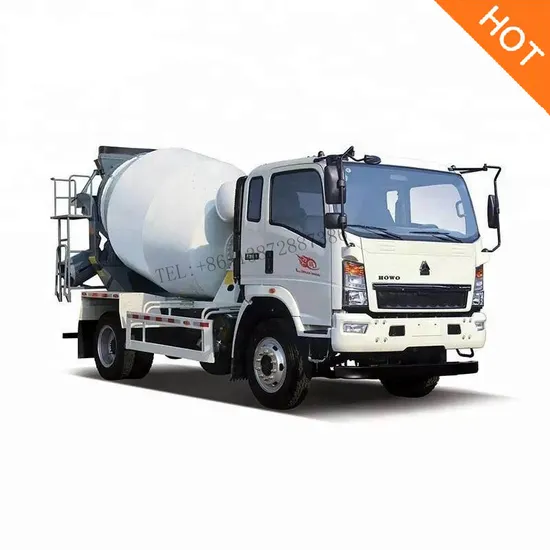
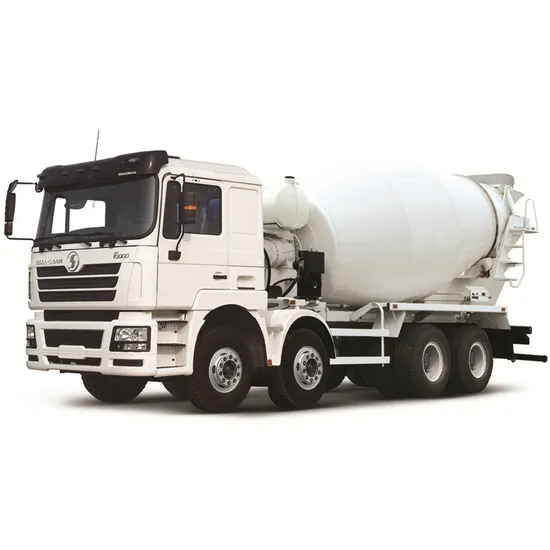
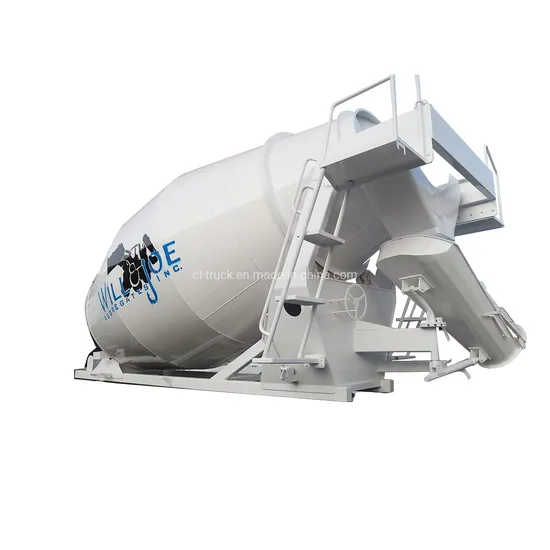
A concrete mixer truck carries a rotating steel drum with spiral blades fixed inside. Turning the drum one way folds the concrete over and keeps it moving; turning it the opposite way drives it out along the blades to the chute. A hydraulic system powered by the truck engine turns the drum. Buyers in some markets call the same vehicle a mixer lorry.
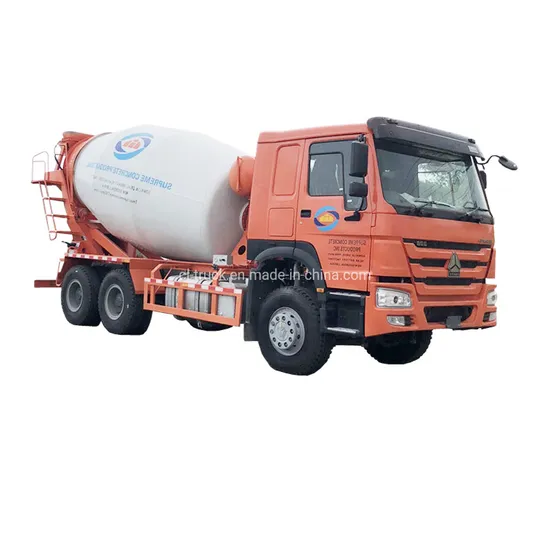
The parts that do the work
- Drum. A tilted, pear-shaped steel vessel. Our listings name Q345 steel for the drum, with thicker plate at the heads.
- Spiral blades. Helical blades welded to the inside wall. They carry the load up and over as the drum turns.
- Hydraulic pump, motor and reducer. The engine drives the pump, the motor turns the drum through a reducer, and the driver controls speed and direction from a lever.
- Hopper and chute. Concrete goes in through the hopper at the top of the drum and leaves along the chute, which swings to reach the pour.
- Water tank. A small onboard tank supplies rinse water. One of our listings shows a 450 L tank.
From batching plant to pour
- The truck is loaded at the plant with the drum turning in the charging direction.
- During the trip the drum keeps turning slowly, so the mix stays uniform and does not start to stiffen at the bottom.
- At the site the driver may speed the drum up for a short time to remix the load.
- The driver reverses the rotation, and the blades push the concrete out onto the chute, a pump hopper or the formwork.
- After the last discharge, the chute and drum are rinsed so no concrete hardens on the blades.
The drum is not mixing the concrete from scratch on most deliveries. The batching plant does the main mixing, and the truck's job is to keep the load workable until it is placed.
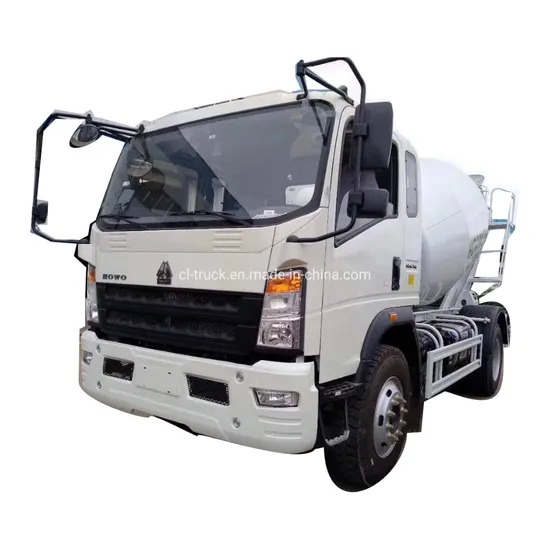
Variations you will see in listings
Not every mixer is a drum on a standard rigid chassis. Some listed models are trailer-mounted, and some are sold as a tank only, without a chassis. A self-loading version is built to load its own materials. Compact 4x2 chassis sit at the small end, and 6x4 and 8x4 chassis carry the larger drums. Some listings also show CNG or LNG engines alongside diesel.
Our concrete mixer trucks category lists all of these. The Sinotruk HOWO 6x4 Heavy Duty Concrete Mixer Truck 8-10m3 lists a GVW of 25,000 kg and a 336 HP engine. The Chengliwei HOWO 4x2 Self-Loading Concrete Mixer Truck lists a 4 CBM box, and the Concrete Mixer Tank 3-15m3 Without Chassis suits buyers who already have a chassis. To compare models by use, see concrete mixer trucks for sale.
Frequently asked questions
Why does the drum keep turning while the truck drives?
Slow rotation keeps the aggregate and cement paste from separating and delays stiffening. If the drum stopped, the load would settle and begin to set, and it could become hard to discharge at the site.
What powers the drum?
Usually the truck engine, through a hydraulic pump and motor, so the drum can turn at its own speed regardless of how fast the wheels are moving. Some units are sold without a chassis, so check what the quotation includes.
Why does the driver wash the drum after pouring?
Concrete left inside hardens and builds up on the blades, which reduces the usable volume and the quality of later loads. The onboard water tank is used to rinse the drum and chute after each delivery.
What is a mixer lorry?
It is another name for a concrete mixer truck: a rotating drum with spiral blades on a truck chassis, turned by a hydraulic system, that keeps the load workable until it is placed at the site.