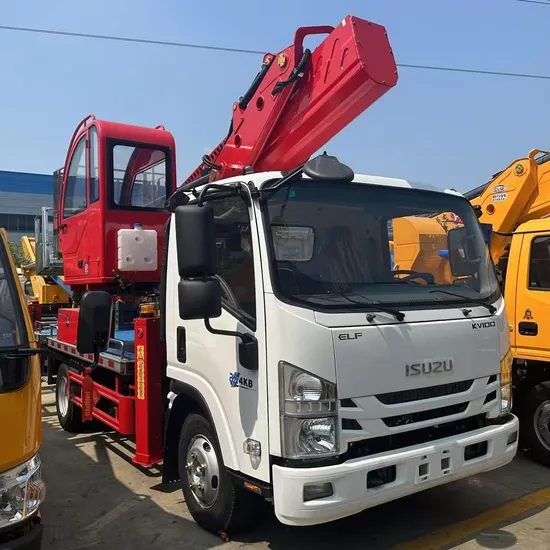
An aerial work truck is chosen on two things: how many people must reach the work, and where the truck can stand. The working height is only one number in the decision.
Name the height and the body version
Write the platform height you need, not the highest number on the price list. Then name the body version: single cab or double row. A double-row truck carries more people, but the body is longer and the turning circle is wider. Say which version you are pricing, so the supplier does not quote a different truck.
Write the crew as a seating need
Do not write "we need four workers". Write how many people ride to the site, how many work on the platform, and how many stay on the ground for traffic control. Put the numbers on the seating plan: front seats, rear seats, and standing space if the truck allows it. Add the weight of the tools the crew carries up with them.
Describe the target and the parking space
Describe what must be reached: a street light, a pole, a building face, a tree line. Give the height and, just as important, the distance from the truck to the work. Then describe where the truck can stand: road width, ground condition, overhead wires, and the space the outriggers need. A truck with a long boom will not help if the legs cannot be deployed.
Choose around the whole brief
Put the four facts together: the height, the crew, the target and the parking space. Send that page to every supplier and ask for the truck and the body version that fits all four. If a supplier answers only the height, ask again for the rest. Compare the answers, then choose the truck your crew can actually use every day.