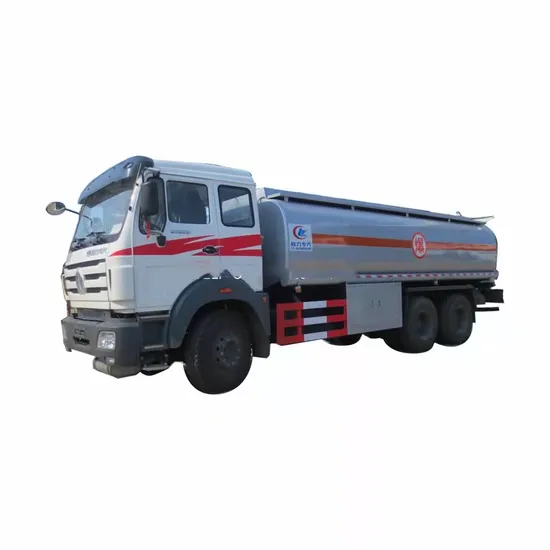
A fuel tank semi-trailer is worth considering for a route organised around larger deliveries and an available, compatible tractor. A rigid tank truck is worth comparing where the complete vehicle must fit a particular delivery circuit and receiving sites. Neither format is the answer solely because its catalogue tank volume is larger or smaller. Build the comparison around the actual stops and the complete operating arrangement.
Describe the route as a series of deliveries
Prepare a recent order sample showing the fuel type, requested quantity, receiving location, delivery window and any access constraints at each stop. Identify which orders can be combined on one route and which require separate arrangements. Include the depot and any return journey, not just the road distance between customers.
Ask each receiving site for its relevant connection information, access plan and conditions for delivery vehicles. A site that accepts one configuration should not be assumed to accept another. Provide drawings or measurements where possible so that the vehicle supplier and the buyer's qualified transport team can review the proposed combination.
Compare two identifiable product forms
The listed three-axle carbon-steel fuel tank semi-trailer records a nominal tank volume of 45,000 L and exterior dimensions of 11,000 × 2,500 × 3,650 mm. It is a semi-trailer enquiry reference; a compatible tractor and the complete combination specification must be addressed separately. Its catalogue compartment entry is unclear, so the number and capacity of compartments require written confirmation.
The Beiben 6×4 fuel tanker truck records a 20,000 L tank on a 6×4 chassis. Its detailed configuration identifies a WP10.340E32 engine rated at 340 hp and a Q235 carbon-steel tank. The transfer equipment and final delivery arrangement still need to match the order.
These figures describe catalogue configurations. They do not establish the legally permitted quantity for a particular trip. Request the complete weight information and have the responsible specialists confirm loading and route requirements for the destination and supplied build.
Use a route comparison, not a capacity contest
| Route question | Semi-trailer proposal | Rigid truck proposal |
|---|---|---|
| What does each stop receive? | Compare the proposed loading arrangement with the actual order pattern | Check whether the specified tank and delivery equipment support the same orders |
| Can the complete vehicle enter? | Review the tractor and trailer combination at every receiving site | Review the actual rigid vehicle dimensions and access requirements |
| What fleet resources exist? | Identify a compatible tractor and its availability | Assess availability of the complete tanker vehicle |
| What receiving facilities are used? | Specify the required transfer interfaces and equipment for review | Specify the same customer requirements so quotations remain comparable |
| What remains to be approved? | Combination, tank and destination documentation | Complete vehicle, tank and destination documentation |
Account for tractor availability
If the buyer already runs tractors, record their exact identities and technical specifications. A general statement that the fleet has heavy tractors is not enough to establish compatibility. Ask for a documented review of the proposed tractor and trailer together, including the connection and weight information requested by the responsible engineering and registration parties.
For a buyer without a tractor, the semi-trailer quotation is only part of the investment scope. Include the tractor, the compatibility review and the relevant support arrangements in the comparison. For the rigid vehicle, assess the implications of maintenance taking the complete truck out of availability. Use your own fleet schedule rather than assuming one format always produces better utilisation.
Specify the receiving interface before comparing equipment
Obtain the relevant receiving-site requirements and submit them with the enquiry. Ask the supplier to identify the supplied transfer equipment, connection details, measurement requirements and exclusions in the final proposal. The Beiben listing records an 80YHCB-60 pump with a stated flow of 60 m³/h and identifies a fuel dispenser as a choice to confirm. A catalogue pump figure is not a promise of the time needed to complete a particular delivery.
Do not compare a trailer quotation without delivery equipment against a truck quotation that includes a different package. Make the scope explicit for both. Selection and operation of the final system belong with qualified personnel using the relevant documentation; this comparison does not provide fuel-transfer instructions.
Keep commercial selection and destination approval distinct
A proposal can fit the order pattern while still requiring destination review. Ask the importer and responsible authorities which documents and inspections apply to the specific vehicle, tank, fuel and intended route. Record unresolved requirements before accepting the build. Do not infer approval from a capacity figure, axle count or product title.
Send both suppliers the same route sheet, receiving-site information and destination. Include the available tractor details for the semi-trailer option. Request an itemised configuration, complete weight schedule and documentation scope. This makes the choice between the two vehicle forms a practical purchasing decision based on the work they must perform.