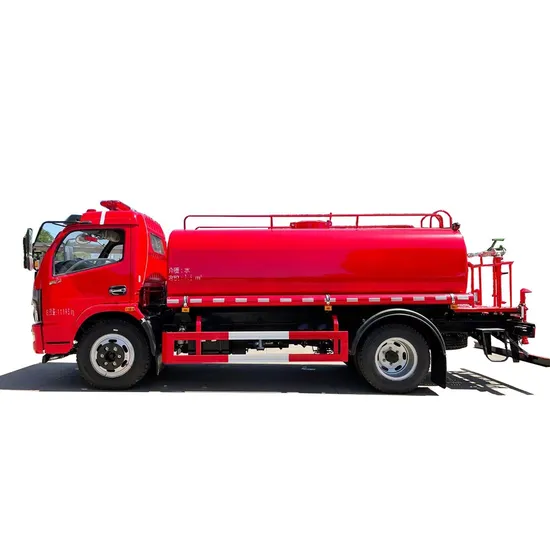
A useful Dongfeng water truck comparison should connect the tank configuration to the task and water source. The two offerings considered here use different capacity wording in their titles. Their detailed equipment blocks share several tank and spray entries. Buyers should therefore compare the selected configurations and refill conditions together rather than decide from the title alone.
Identify the two offerings clearly
The Dongfeng water bowser listed with 10000 L wording gives detailed overall dimensions of 5990 × 1960 × 2380 mm. The Dongfeng 4×2 water spray truck listed with 8000 L wording gives 6990 × 1960 × 2380 mm in its detailed table.
Both detailed tank blocks list 4000–5000 L and 4–6 mm carbon-steel or stainless-steel material options. The final enquiry should state the required tank size and ask for one selected configuration per quotation. These entries do not support treating the titles as two already-fixed comparable tank builds.
Compare the detailed spraying fields
| Detailed field | Water bowser offering | Water spray truck offering |
|---|---|---|
| Overall length | 5990 mm | 6990 mm |
| Tank-capacity block | 4000–5000 L | 4000–5000 L |
| Pump-flow entry | 60 m³/h | 60 m³/h |
| Watering-width entry | At least 14 m | At least 14 m |
| Water-cannon range entry | At least 23 m | At least 23 m |
| Water-inlet diameter | 40 mm | 40 mm |
The shared spray entries mean the comparison needs more than a presumed performance difference. Identify the actual outlet arrangement required for road sprinkling, directed watering or another defined job. Pump flow is a component specification and should not be treated as the water consumption of every operating mode.
Relate tank selection to the refill point
Describe where water is available, how the truck approaches the source and how refilling is arranged. A nearby source with convenient access creates a different operating situation from a remote source that takes the truck away from the work area.
Provide the expected water quantity for one task, using measured records where available. This gives the supplier a basis for discussing the selected tank size without assuming that the largest advertised volume is always the most useful choice.
Include access at both ends of the job
The detailed length difference between these two examples matters when discussing parking and manoeuvring space. Show the worksite entrance and refill location on the same access brief. A vehicle must be able to use both places for its water capacity to be useful.
Keep transport width and height separate from watering width. The latter describes the equipment's stated work coverage, not the space to pass needed to drive through an entrance.
Send a comparison-ready enquiry
For project buyers, provide the vehicle purpose, water quantity needed per task, refill location, access dimensions and preferred tank material. Ask for two quotations using clearly selected tank sizes and the same requested spray functions. That produces a decision based on usable configuration and refill conditions rather than two headline capacity labels.