Choose the transport format before comparing insulation or cooling equipment. A milk tanker carries milk in a bulk vessel with loading and unloading connections. A refrigerated box truck carries packaged products inside an insulated cargo compartment. They address different handling tasks, so one is not simply a colder version of the other.
Insulation also does not prove that a vehicle has active refrigeration. A tank may be designed to limit heat transfer without a cooling unit that removes heat during the journey. The purchase specification must identify the supplied equipment and the conditions it is expected to handle.
Follow the milk from collection to delivery
Describe what enters the vehicle and what receives it at the destination. Bulk collection from farms or a collection centre raises questions about tank connections, transfer equipment and cleaning arrangements. Delivering cartons, bottles or other packaged dairy products raises questions about loading units, doors, storage layout and the delivery-stop pattern.
The FAO overview of milk collection and transport distinguishes milk-can and bulk-tanker collection systems and emphasizes the suitability of transport equipment for cleaning and sanitization. Use the actual collection arrangement as the starting point rather than assuming every dairy operation needs the same vehicle.
Also specify the product. Requirements for raw milk, chilled packaged products and shelf-stable packaged products should come from the dairy processor and its handling specification. A generic dairy label is not enough to select a temperature-controlled vehicle.
Separate insulation from active refrigeration
Insulation reduces heat transfer through the body or tank structure. Active refrigeration uses a cooling system to remove heat. A quotation that only names an insulation material has not yet described the refrigeration unit, its duty or its operating conditions.
For a bulk tanker, ask whether active cooling is included at all. If it is proposed, request a clear equipment description and the intended performance conditions. Do not assume a stainless-steel exterior proves thermal performance or that insulation alone will bring warm milk down to the required loading temperature.
For a refrigerated box truck, identify both the insulated body and the selected cooling equipment. Cargo temperature, ambient conditions, loading arrangement and door openings belong in the enquiry. The presence of a refrigeration unit does not establish that every dairy load and every route will meet its handling specification.
Compare the equipment interfaces
| Requirement | Bulk milk tanker | Refrigerated box truck |
|---|---|---|
| Load format | Bulk liquid received into an identified tank arrangement | Packaged products carried in a cargo compartment |
| Loading and delivery | Connections, transfer equipment and receiving facilities | Doors, loading units, access and distribution of cargo |
| Temperature specification | Loading conditions, insulation and any explicitly supplied cooling system | Body insulation and a cooling unit selected for the delivery task |
| Cleaning information | Tank and product-contact equipment documentation | Compartment surfaces, drainage and access documentation |
| Records | Batch identity and the monitoring requirements defined by the dairy operation | Product identity, delivery events and the required temperature records |
This table defines quotation topics. It is not a cleaning procedure or a food-safety approval. The dairy operator should specify the process requirements and obtain the relevant technical documentation for the exact supplied equipment.
Two catalogue examples, with different roles
The HOWO 6×4 milk tanker is listed as model CLW5250GNYZ3 with a detailed tank volume of 20,000 litres. This identifies a bulk-transport option. The volume must not be presented as a confirmed milk payload, and the available information does not establish an active refrigeration unit or a guaranteed temperature-holding duration.
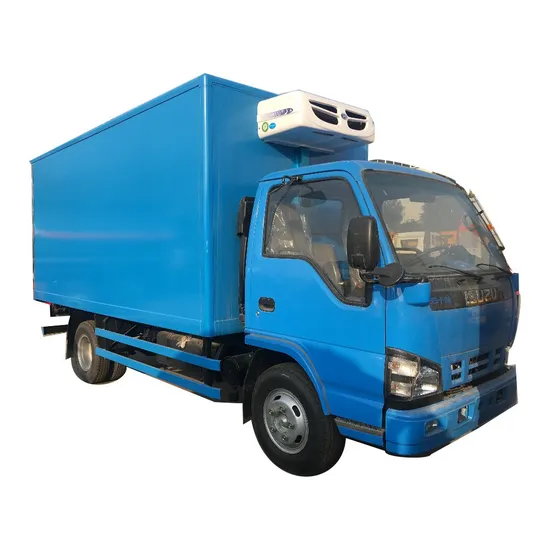
The Isuzu 600P refrigerated truck is a box-body alternative for temperature-controlled cargo. Its detailed record lists a 4,100 × 1,800 × 1,900 mm cargo box and refrigeration-unit options. Those options need to be narrowed to one supplied configuration for the actual packaged-product duty.
Do not transfer a freezer temperature target from a catalogue into a milk-delivery requirement. The product handling specification should determine the required conditions; the vehicle quotation should then explain how the selected build addresses them.
Ask for monitoring and cleaning scope at quotation stage
Identify who defines the required records, what equipment produces them and what is included in the vehicle price. A temperature display, a recording device and a complete reporting arrangement are different deliverables. Request their descriptions rather than assuming they are all included in the word refrigerated.
For a tanker, provide the receiving connection information and the cleaning-system interfaces required by the dairy operation. For a box truck, describe packaging, loading equipment and access needed for the agreed cleaning process. Request material and component documentation where it is relevant, without treating a broad catalogue certification label as approval of the complete food-transport operation.
Make the purchase brief product-specific
Send Chengli the milk or dairy-product format, quantity per journey, loading conditions, journey duration, destination climate, stop pattern and receiving facilities. Include the product handling requirements supplied by your processor and any destination documentation requirements.
Use those inputs to request either a defined bulk-tanker package or a defined refrigerated-box package. The useful comparison is whether the equipment matches your transfer and temperature-control task, not whether one advertisement contains the words insulated, stainless steel or refrigerated.