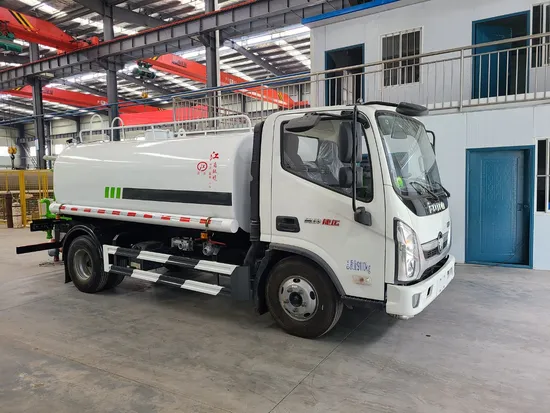
Frequent refill journeys can leave a construction site's watering work waiting even when the truck has an apparently suitable tank. Plan the complete cycle from the water source to the work area and back. The useful questions are how much water the shift needs, how much one trip can actually supply and when refilling is possible.
Map the source-to-work-area journey
Record the source location, access restrictions and travel distance. Include queues, connection time and any limits on when the source is available. Then map the route through the work area and identify the locations needing water.
Separate travel from application time. A site with a nearby source may have a different refill problem from one where the truck must leave the project and return through a busy entrance. A tank-capacity comparison alone cannot explain that difference.
Estimate the number of loads using site data
A basic planning relationship is: water required per shift ÷ effective water delivered per load. Round up when estimating complete loads needed. If the truck starts the shift full, distinguish that initial load from the subsequent refill visits.
Use your actual effective delivery quantity, with the selected vehicle's loading and operating limits accounted for. Do not substitute an unconfirmed catalog tank title. The result estimates loads, not whether one truck can complete all the work within the shift.
Check the time available for each cycle
For each cycle, include travel to the source, waiting, connection and filling, return travel and water application. Use measured or project-supplied times where available. A pump-flow entry alone does not determine filling time if the source or connection limits supply.
Compare the required cycles with the shift's available time and source opening window. If the plan has no allowance for queues or interruptions, identify what work can be rescheduled and what backup supply is needed.
Discuss vehicle options against that cycle
The Dongfeng 9000 Liters sprinkler and DFAC 8000 Liters tanker provide two named capacity references. Both detailed equipment tables also contain 4,000–5,000 L tank entries. Request the exact tank and chassis configuration before using either in the load calculation.
The Foton 4X2 5000 Liter bowser has a separate 6–7 m³ tank entry and describes front flushing, side spraying and rear spraying. Its selected capacity also needs to be stated explicitly. Match the required water function as well as storage volume.
Ask the supplier to identify the filling connection and equipment supplied. The Foton's listed pump-flow entry and the Dongfeng/DFAC pump entries should not be treated as guaranteed refill performance at your source.
Include shift handover and backup needs
Decide whether the next shift should receive a full truck and when refilling can occur without interrupting priority work. Record an alternative source or other project-approved supply arrangement where one is available. Do not assume that buying a larger tank alone resolves a closed source or a long queue.
Send Chengliwei your water demand per shift, effective quantity required per trip, refill-point distance and available filling hours. Add the watering functions and access conditions. Those details support a vehicle proposal and refill plan based on the site's actual cycle.