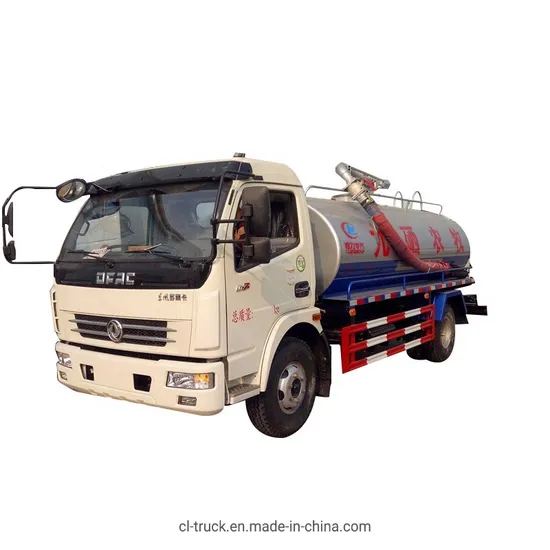
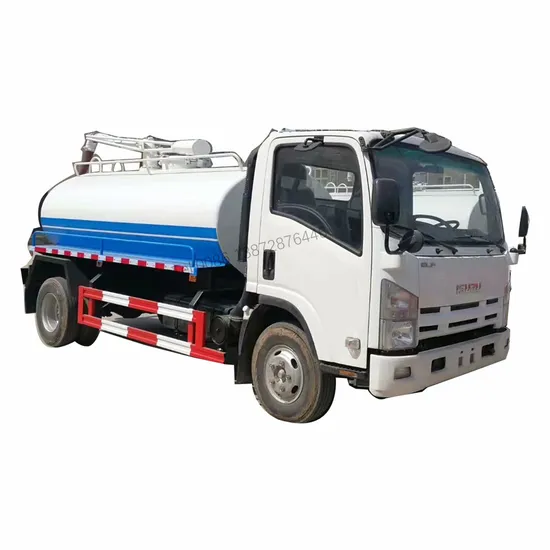
Septic truck access requirements involve two connected routes: the path the vehicle follows and the path the hose follows after parking. A narrow entrance may limit the truck's position, leaving the collection point farther away. Describing both routes helps the supplier understand the access problem without assuming that a longer hose solves every restriction.
Measure the entrance and approach
Record the clear entrance width and overhead space to pass. Include gates in their available open position, overhanging structures and any narrowing immediately before or after the entrance. Add the surface condition and relevant changes in level along the approach.
The Dongfeng sewage suction truck detailed table lists approximate dimensions of 6880 × 2100 × 2550 mm and a 3800 mm wheelbase. These are useful vehicle references for the site sketch, but they do not establish the turning space available inside a particular property.
Show turns and the planned parking position
Draw the route from the entrance to the working position, including corners, walls and parked vehicles. Show whether the truck can leave by continuing forward or needs a separate manoeuvring area. Identify the space that is actually available during the service period rather than an unobstructed layout that exists only occasionally.
The Dongfeng fecal suction truck gives a similar dimensional reference while describing a different tank arrangement. Keep the proposed complete vehicle configuration with the drawing so the supplier can assess the intended unit.
Trace the actual hose route
Draw the route from the truck's connection position to the collection access point. Mark corners, steps, walls and places where a direct line is unavailable. A straight-line distance between two points may be shorter than the path the hose must follow.
Record known horizontal sections and the elevation difference separately. If a measurement is approximate, label it as such. Photographs showing the whole route help explain features that are difficult to communicate with a single length.
Keep hose length and vertical suction range distinct
Hose length is the physical length available to follow the route. Vertical suction range describes an elevation relationship under stated operating conditions. A long hose does not prove an equally large vertical suction capability. A pump specification does not automatically supply the required hose schedule.
The Isuzu 700P fecal suction truck detailed equipment information identifies a Hangzhou Weilong vacuum pump. The enquiry should still describe the actual hose path and height difference; the pump model alone cannot communicate those site conditions.
Attach a practical site sketch
- Entrance width and overhead space to pass, with units.
- Approach route, corners and available manoeuvring area.
- planned truck position and direction of travel.
- Collection access point and its location relative to the vehicle.
- Actual hose path, including bends and obstacles.
- Horizontal distances and vertical difference as separate measurements.
- Photographs labelled to match the sketch.
- Selected truck reference and requested hose-connection arrangement.
For sanitation contractors, this information gives the supplier a clear access brief for individual service sites. Ask for a planned vehicle and hose configuration related to the drawing, keeping the focus on reaching the work location rather than estimating route collection volume.