A tipper truck should be matched to the whole material-handling route. A vehicle that reaches a narrow site may not suit the loading method or required batch size. A heavy tipper may provide a relevant body option but need more room at the entrance and unloading point. Describe all four stages before choosing.
Start at the site entrance
Measure the entrance, overhead clearance and turning area. State whether workers and tools must travel with the load. The JMC N72 double-row dump truck lists a 4x2 layout, 3,360 mm wheelbase and five seats, making it a reference for a small site-access and crew requirement.
Its dimension table has mixed overall/body labels. Request a drawing with the vehicle envelope and usable cargo-body dimensions clearly separated. Do not treat its small-truck description as proof of suitability for every quarry or rough access route.
Describe how the material will be loaded
Provide the material type, largest pieces, expected load per trip and the equipment used for loading. Include loading height and space around the truck. These details help the supplier address body construction and the vehicle arrangement.
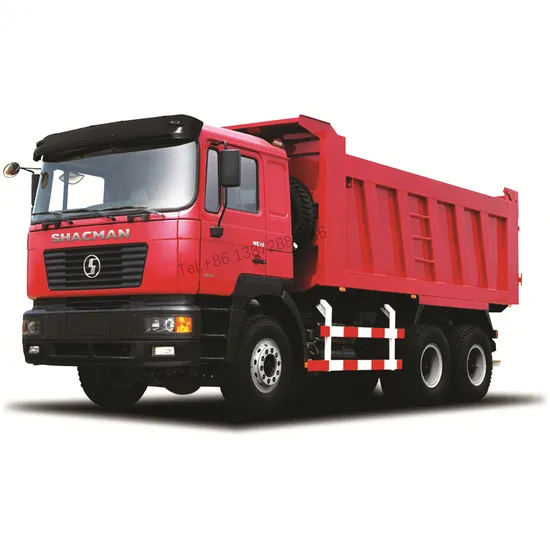
The Shacman tipper listing gives a detailed 6x4 configuration with an 8,329 × 2,490 × 3,450 mm vehicle envelope and a 5,600 × 2,300 × 1,100–1,600 mm body entry. Select one body height in the offer rather than treating the alternatives as a finished configuration.
Describe the haul section independently
Record route distance, surface conditions, gradients and known access restrictions. Give the supplier the intended carried mass and the normal operating pattern. Request the engine, transmission and rated complete-vehicle loading information associated with the proposal.
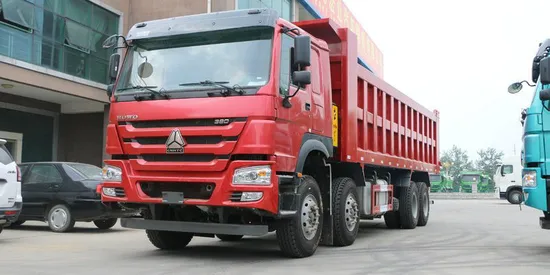
The HOWO dump truck listing has an 8x4 detailed vehicle description and a 10,310 × 2,500 × 3,450 mm overall entry, while its summary includes different drive wording. The quotation should resolve the actual chassis. Its larger body entry is relevant to a heavy-haul inquiry, but does not establish route approval or an operating-cost advantage.
Finish at the unloading position
Describe the receiving area, available space and any overhead obstacles. Request the selected body's unloading envelope and lifting-system documentation. The JMC listing describes middle lifting. The Shacman summary and detailed table contain different lifting descriptions; the HOWO detailed table describes front lifting.
Have the supplier identify the actual installation for each offer. Do not infer a loaded unloading cycle from an empty-body time or use transport dimensions as the full raised-body envelope.
Choose the proposal that addresses the task
| Requirement | Information the supplier needs |
|---|---|
| Small site delivery with crew | Access dimensions, seats, body space and carried load |
| Heavier quarry or construction haul | Material, loading method, batch mass and route conditions |
| Discharge at a restricted location | Unloading-area dimensions and selected body/lift arrangement |
The country names in these product titles identify catalog listings, not evidence of completed export projects. Send Chengliwei your actual destination and route details. Ask for a selected chassis, body and lifting configuration that addresses entrance, loading, haul and unloading as one task.