A garbage compactor truck should fit the collection route before its body volume is selected. Narrow lanes, the location of bins, loading methods and the journey to the unloading point all affect the choice between a light vehicle and a larger body. A route brief gives these factors a common structure and prevents a capacity label from becoming the entire buying decision.
Define the route and its access restrictions
Mark the narrowest lanes, entrances and turning locations. Identify stops reached directly by the truck and stops where bins are moved to a collection position. Record overhead restrictions and the space needed behind the vehicle for the intended loading arrangement.
The light compactor truck offering includes a detailed 6 m³ body example with overall dimensions of 6710 × 1880 × 2600 mm. It provides a smaller reference for an access-led enquiry. Specify the selected chassis and body together because the listing presents more than one chassis description.
Inventory bins and loading methods
Record bin capacity, shape and lifting connection, with photographs where possible. Identify wheeled bins, communal containers and locations using another loading method. A body-volume entry does not prove that a truck's loading mechanism matches the containers already used on the route.
For each container group, provide the quantity and location rather than treating the entire route as one uniform bin type. This helps the supplier describe the required loading equipment and highlights service points that may need a different collection arrangement.
| Route requirement | Configuration information | Decision supported |
|---|---|---|
| Restricted lanes | Complete vehicle dimensions and manoeuvring layout | Whether the truck reaches the stop |
| Existing bin fleet | Bin dimensions and lifting connection | Required loading mechanism |
| Dispersed collection points | Route distances and access hours | Travel and stopping sequence |
| Observed waste quantities | Measured route loads and selected body volume | Body and carrying configuration |
| Unloading destination | Access, receiving hours and discharge space | Complete collection cycle |
Compare larger bodies after access is established
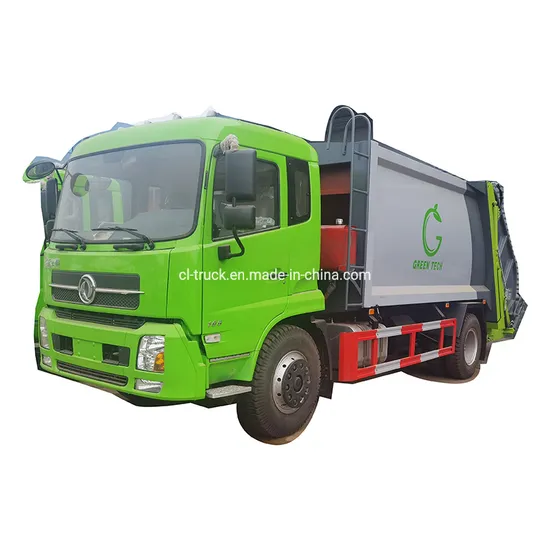
The Dongfeng Tianjin compactor garbage truck detailed table presents a 10–14 m³ body range and overall dimensions of 8730 × 2470 × 3330 mm. It provides a larger-body alternative where the route accommodates that footprint. Select a specific body size within the range for the quotation.
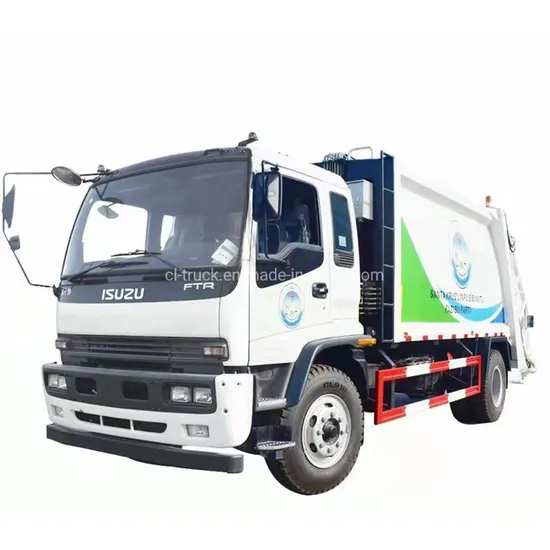
The Isuzu FTR refuse compactor lists a 12 m³ body and the same stated overall dimensions of 8730 × 2470 × 3330 mm. It is another configuration to discuss for accessible routes, with its own chassis and drivetrain specification. Matching dimensions do not establish identical loading equipment.
Include the unloading journey in the comparison
Locate the receiving point and record travel time, access arrangements and observed queues. A smaller vehicle may reach restricted stops but require a different unloading pattern from a larger body. Conversely, a larger body brings little benefit at collection points it cannot access.
Use measured route loads to assess this tradeoff. Do not infer daily waste generation from a truck title's tonnage or multiply a normal body volume by an assumed compaction ratio. The actual waste stream and operating records are the useful planning inputs.
Send a route-based purchase brief
For sanitation operators, combine the route map, bin inventory, loading requirements and receiving-point information in one enquiry. Ask for a complete truck-and-loader configuration matched to those details. This makes the choice between light and medium refuse compactors a practical service decision grounded in how collection will take place.