A remote worksite may need fuel delivered to a central tank, directly to machines, or through both arrangements. These are different tasks for a fuel tanker truck. Describe the equipment distribution, storage points, delivery batches and access roads before selecting the tank and dispensing package.
Map where the fuel is received
List the machines or storage points supplied and show their locations. For each receiving point, identify the connection arrangement, quantity per delivery and where the tanker can park. Explain whether the truck remains at a central point or travels between individual machines.
Transport capacity describes the load brought to the site. Hose reach, pumping and metering describe how it is delivered at the end of the trip. A larger tank does not automatically provide the required final connection or dispensing function.
Use the Foton reference for a defined delivery batch
The Foton Aumark T33 oil tank truck lists a 5,000-liter tank-capacity entry, two-to-three-compartment wording and a 30 m³/h pump entry. Its equipment description also includes a 15 m automatic-return reel/nozzle and a ticketing dispenser, with the dispenser identified as optional in the summary.
The title and detailed chassis reference differ, and a separate equipment volume entry says 4 m³. Ask for the chosen chassis and tank configuration. If direct machine refueling is required, have the supplier identify the dispenser, meter, reel and nozzle actually included.
Use the Beiben references for larger transport requirements
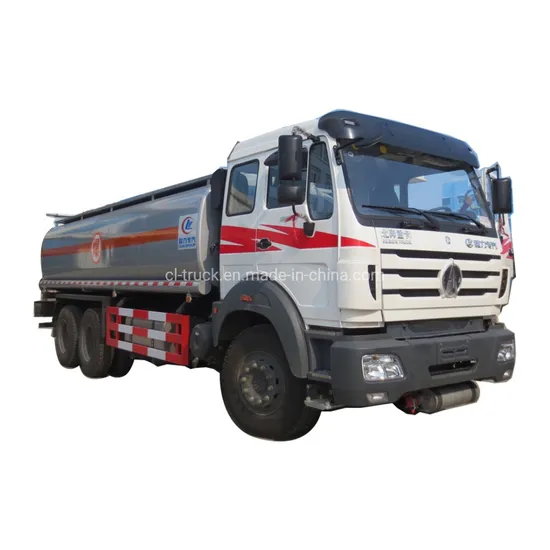
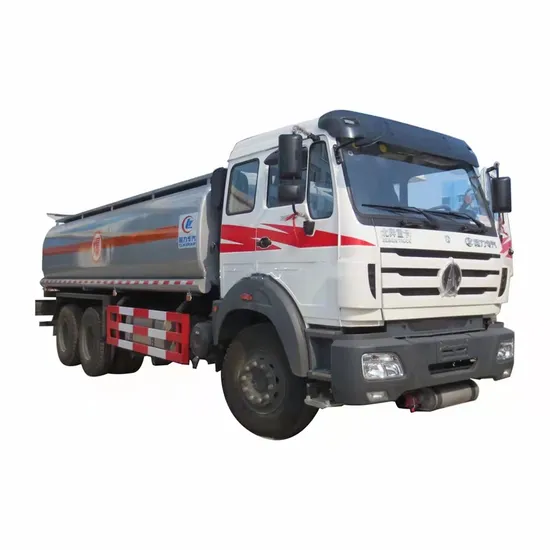
The Beiben 10-wheel 20cbm oil transport truck and Beiben gasoline/diesel tanker both describe a 20,000-liter tank and 6x4 layout. Their detailed dimensions are approximately 10,400 × 2,500 × 3,400 mm.
These provide references for a larger delivery-batch inquiry, subject to the selected vehicle's loading information and route conditions. Ask for the required compartment allocation. The normal tank volume does not state how much of each requested fuel can be assigned to a compartment.
Specify transfer and dispensing separately
The Beiben pages list an 80YHCB-60 pump with a 60 m³/h flow entry and one flowmeter. An oiling machine with a 15 m hose is marked optional. Request a function-based equipment list instead of assuming the standard transport truck includes every on-site refueling accessory.
Describe the receiving connection and hose route. Pump-flow entries are not guaranteed transfer times through every site arrangement. Ask the supplier to address the planned hoses and receiving equipment when describing performance.
Include the road and delivery schedule
Provide route length, surface conditions, entrance dimensions and available turning space. Identify the replenishment source and planned delivery windows. State how demand changes between shifts or project phases, using your own consumption records rather than a generic fuel-demand estimate.
Complete this delivery-scenario checklist
- Fuel type and quantity per trip: [details].
- Receiving points and quantity at each: [details].
- Central storage, direct machine refueling or both: [details].
- Required compartments, hose reach and metered records: [details].
- Route, entrances, parking positions and delivery schedule: [details].
Send the completed scenario to Chengliwei. It gives the supplier a clear basis for selecting transport storage and the separate equipment needed to deliver fuel at the worksite.