
Every truck on the road can suffer a blowout, and a loaded work truck is no exception. How the driver reacts in the first few seconds matters more than anything else. A calm driver who knows the right sequence can usually bring the vehicle to a stop safely, while panic and sudden braking can turn a flat tyre into a serious accident.
This guide explains what to do during a blowout, what to do if the brakes also let you down on a slope, and how to judge the repair options afterwards. It is written for drivers, fleet supervisors and workshop staff.
Keeping control during a blowout
When a tyre bursts, the truck will often pull and sway from side to side. Follow this order:
- Do not panic. Grip the steering wheel firmly and keep the truck pointing where you want to go.
- Release the accelerator quickly so that the truck slows down. Engine drag will take off a lot of speed by itself.
- Once engine drag has the speed under control, apply the brakes lightly and let the truck come to a gradual stop.
- Do not use emergency braking. A hard stab at the brake increases the swaying and can make the truck uncontrollable.
- Stop in a safe place well away from traffic, and have the truck taken to a workshop.
A blowout on a fast road is especially dangerous. Drive with care, do not speed and do not drive when tired.
If the brakes fail on a downhill
Brake problems after a blowout are a common cause of accidents. If the brakes fail on a downhill stretch and the vehicle itself cannot hold its speed, the aim is to create resistance. Use any safe run-off area or natural barrier alongside the road to take speed off the truck. If nothing suitable is within reach, a gentle, glancing contact between one side of the truck and a bank may add enough drag to slow it. This is a last resort, and prevention through regular brake checks is far better.
Choosing the right repair
Once the truck is safe, decide whether the tyre can be repaired at all. There are three usual methods:
- Plug repair. A special rubber strip is pushed into the puncture without removing the tyre from the rim. It takes only minutes, but it is not durable and does not cope with large wounds, so treat it as a temporary measure.
- Patch repair. The tyre is taken off the rim and a patch is stuck to the inside layer over the damage. It can seal larger wounds, but after time in water and at speed the repair may start to leak again.
- Hot repair. The tyre is removed, raw rubber is applied to the damaged area and baked until it bonds completely. It is the most durable, but it needs skill, because poor heat control can scorch or deform the tyre.
Repair is not always the answer. If the sidewall has a cut longer than 1 cm, or a steel object has pierced the tread and left a large hole, replacing the tyre is usually the better choice. Such a tyre is hard to repair and hard to trust afterwards.
Tyre sealant has some effect, but it has limits. It is of little use once the tyre has lost all its air, and it can corrode steel and alloy rims over time. That can damage the seal between rim and tyre and cause fresh leaks.
Extra care in hot, rough conditions
On many African routes the tyres face conditions that can raise the risk of a failure. High road temperatures, sharp debris on unsurfaced roads, overloaded bodies and long distances between workshops can all play a part. Check tyres at the start of each shift for cuts, bulges and foreign objects, check the pressure at the value in the operator's manual, and carry a serviceable spare and the tools to change it. Because spare tyres and repair services may be far away, agree on a clear plan for breakdowns before the truck leaves the yard.
Operators who move between different vehicle types should be briefed on the specific truck. For more on common truck types, see garbage truck types explained, and for tipper work see how a dump truck hoist works.
Related models
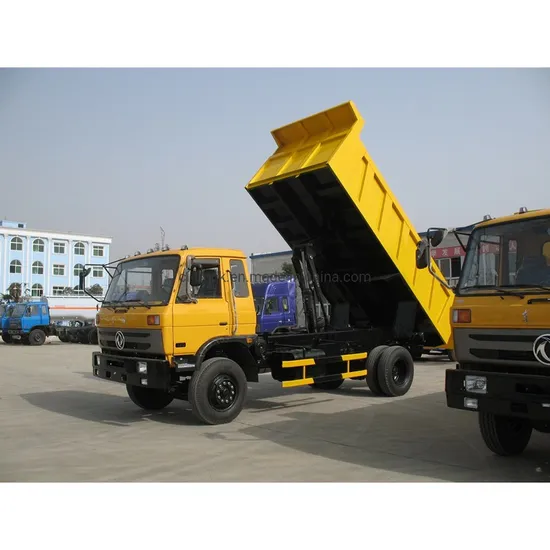
See our compactor garbage trucks and dump trucks. Examples include the 100P 4x2 small compactor bin truck, the 6m3 refuse compactor upper body and the Dongfeng 4x2 dump truck 12m3.
To ask for a quotation, please contact us or message us on WhatsApp.