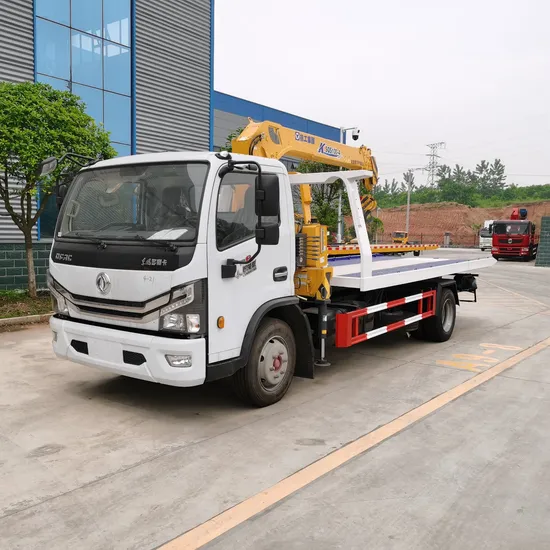
A winch is a powered drum that winds in a cable or rope to pull a load. On a truck it is used for self-recovery when the vehicle is stuck, for recovering other vehicles, and for clearing obstacles, dragging loads and positioning equipment. Wrecker trucks, rescue vehicles, road-clearing trucks and other special-purpose vehicles all rely on one.
Many fleets only think about the winch when a truck is already stuck. That is the wrong moment to learn how it works. This guide explains the main parts, how to read the pulling rating, and what extra care a winch needs where roads are soft, dusty or far from a workshop.
The main parts of a winch
Most electric winches share the same basic layout. Knowing each part makes inspection faster and fault-finding easier.
- Relay or control unit: receives the signal from the remote control. Inside is the circuit that reverses the direction of the motor.
- Motor: a direct-current electric motor drives the winch. Some models include a cooling fan to stop the winch overheating.
- Fairlead (cable guide): guides the cable onto the drum when the pull is at an angle. A fairlead with rollers is called a roller fairlead.
- Drum: the cylinder the cable winds onto. The motor turns it, and the remote control button reverses it. Heavy-duty winches use heavier cable, so the drum is larger.
- Clutch: engages and releases the drum with a simple handle, so the cable can be pulled out freely by hand.
- Remote control: lets the operator control the winch from a distance. The most common type is wired to the winch, and wireless versions are also available.
How to read the pulling rating
Winch pulling force is usually rated in pounds. It can be converted to kilograms or tonnes, so check which unit the manufacturer uses before comparing two winches.
Choose a rating with a comfortable margin. A vehicle stuck in mud or sand is often much harder to move than its normal weight suggests, because the ground is holding it. Never pull a load that is beyond the rated capacity of the winch.
Why the cable layer matters
The rated pull is not the same on every layer of cable. The more turns of cable wound on the drum, the lower the pull on the outer layer. A winch with a longer drum needs fewer layers for the same length of cable, so it keeps more pulling force on the outer layer. With the same winch, a shorter length of cable out gives more pull on the outer layer than a long length.
In practice, when you can, pull from a position that uses less cable, and do not assume the full rating applies when most of the cable is on the drum.
Working conditions in Africa
Trucks in Africa often work on unsurfaced roads, and rainy-season mud, soft sand and washed-out tracks can make recovery a regular job. Long distances to the nearest workshop also mean a winch failure can leave a vehicle stranded for a long time. A few habits help.
- Clean mud, sand and dust from the cable, drum and fairlead after every recovery. Grit left in the cable and rollers can cause wear.
- Do not run the motor continuously for long pulls in hot weather. Let it cool, because overheating is a known risk, and this is why some winches have a cooling fan.
- Check the electrical connections and the remote control lead often. Dust and moisture can affect them.
- Check the clutch handle moves freely and fully engages before each job.
- Train every driver, including those who normally drive other vehicle types, to use the winch within its rating and to keep people away from the cable line during a pull.
- Keep spare cable, a fairlead part and remote control lead with the vehicle, because spare-parts lead times can be long.
Choosing a truck with the right winch
If recovery is your main job, look at how the winch is built into the truck, not only at its rating. Check the crane and winch combination, the chassis and the drive layout together. Our wrecker truck range covers light, medium and heavy models. See also our guides on what a rotator wrecker is and on choosing between a flatbed and a wheel-lift wrecker.
Related models
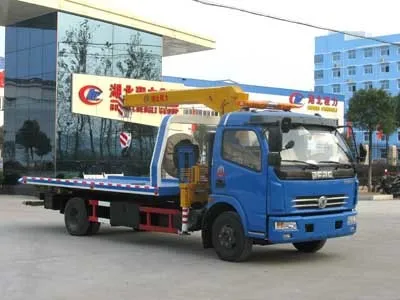
These wrecker models carry winch equipment or a crane for recovery work.
- Dongfeng 4t winch wrecker tow truck
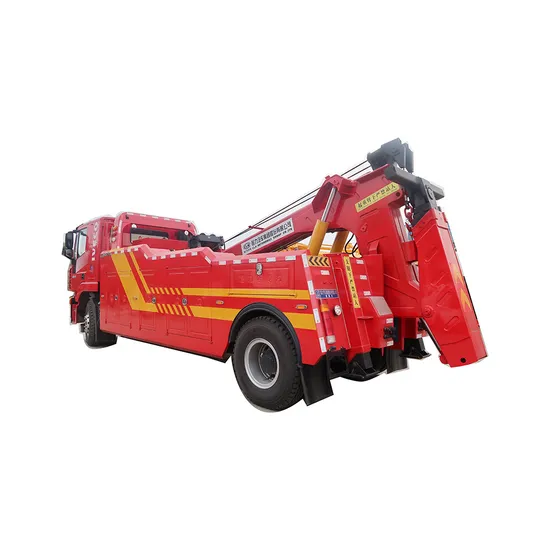
- Hongyan heavy-duty 20t wrecker with dual winch
- Chengliwei Dongfeng 4x2 wrecker with 5t crane
To ask for a quotation, please contact us or message us on WhatsApp.