An inverter is an electronic device that changes low-voltage direct current from a battery, commonly 12, 24 or 48 volts, into alternating current at mains voltage. It does the opposite job to a charger, which turns mains power into direct current. On a vehicle, it lets you run lights, a laptop, a small appliance or a tool from the battery when no mains supply is available.
Mobile food trucks, advertising trucks, mobile clinics and other special vehicles often work away from the grid. A well-chosen and correctly installed inverter keeps equipment running, while a careless installation can flatten the battery or damage the unit. This guide covers the points that matter most.
Match the voltage and the power
Every inverter has a rated DC input voltage. The battery voltage must be the same: a 12 V inverter needs a 12 V battery, and a 24 V inverter needs a 24 V battery. Check the vehicle's electrical system before you buy.
The inverter's output power must be higher than the power of the equipment you connect. Add up the load of everything that will run at the same time. Appliances with a motor or compressor, such as refrigerators and air conditioners, draw much more power when they start, so leave a larger margin for them.
Connect it correctly
- Connect positive to positive (red to red) and negative to negative (black to black). Reversed polarity can destroy the unit.
- Use cables thick enough for the current, and keep them as short as practical.
- Before connecting, make sure your hands and tools carry no loose metal that could short the battery terminals and cause burns.
- Earth the inverter case properly before you connect the input and output.
- Do not plug a charger into the circuit that the inverter is supplying. Charging and inverting must not happen at the same time.
- Switch the inverter off before connecting or removing a load, and wait at least 5 seconds between switching off the input and switching on again.
Where to install it
Put the inverter in a dry, ventilated place, protected from rain and away from flammable or explosive items. Leave at least 20 cm of free space around it, and never cover it or stack things on top. Keep the surrounding temperature at or below 40 degrees Celsius. The case can become hot after long continuous use, so keep heat-sensitive items away.
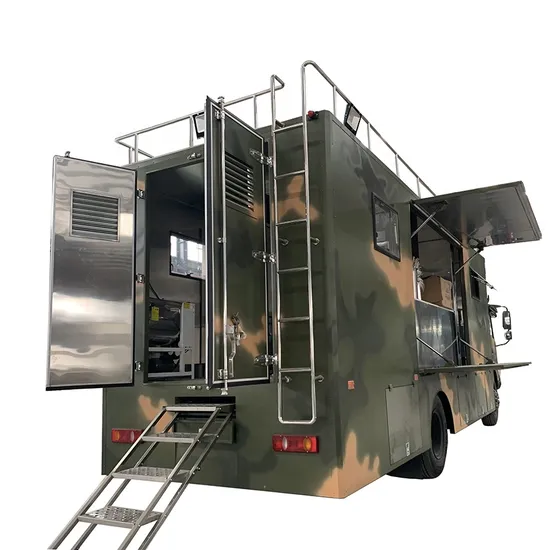
Working conditions in Africa
Heat is the first challenge. Vehicles parked in full sun can have a very hot cabin or equipment box, and an inverter in a closed space may overheat and shut down. Fit it in the shade where air can move, and keep the vents clear.
Dust and rain are the next. Dust can block ventilation openings, and moisture can enter at the connections, especially on unsurfaced roads or during the rainy season. Wipe the case with a dry cloth and check the vents and terminals regularly.
Fuel and generator supply can also be uncertain, and workshops may be far away, so operators often depend on the battery for longer than planned. Watch the battery level and do not push it to flat. Where several drivers share a vehicle, make sure everyone knows how the inverter is meant to be used.
Starting loads and low-battery warnings
Televisions, monitors and electric motors draw a peak of power when they start. An inverter can usually handle a short peak above its rated power, but some appliances exceed even that, and the inverter then trips its overload protection. When running several devices, switch all of them off, switch the inverter on, then turn the devices on one at a time, starting with the one with the highest peak.
As the battery voltage falls, the inverter sounds an alarm. On a 12 V unit this is typically at about 10.4 to 11 V, with automatic shut-off at about 9.7 to 10.3 V, so shut sensitive equipment down when the alarm sounds. A red light normally means the unit has switched off because of overvoltage, undervoltage, overload or overheating. Start the engine to recharge the battery. Avoid input voltages above 16 V, which can damage the unit even without an alarm.
If you suspect a fault, disconnect both input and output and have a qualified technician check it. Do not open the case yourself.
Related models
If you are planning a vehicle that needs reliable on-board power, see our mobile food trucks and LED advertising trucks. For the power side of an event, read how much power an LED advertising truck needs at an event.
- Dongfeng 7.6m catering food truck
- Changan Karry mini mobile food truck
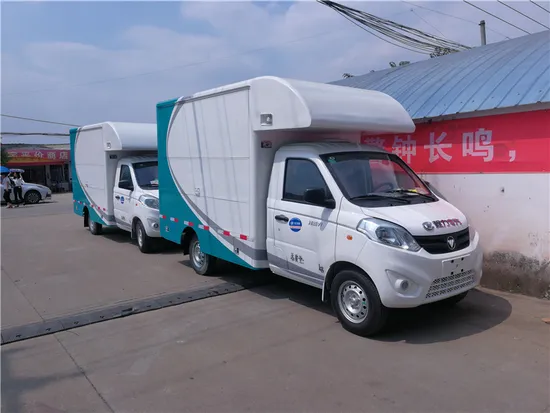
- Foton mini vending fast food truck
To ask for a quotation, please contact us or message us on WhatsApp.